
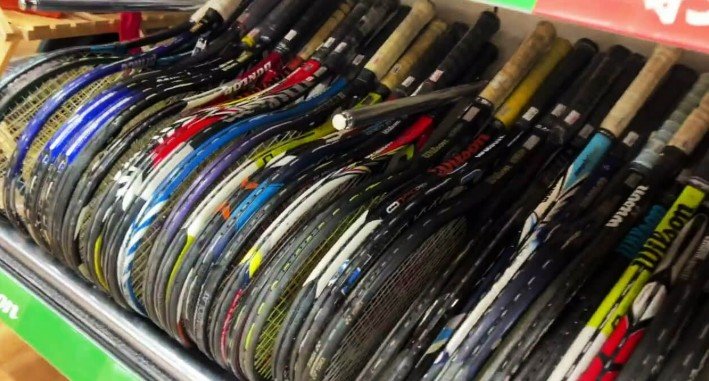
When buying a new tennis racquet, you’ll probably compare the head size, weight, balance and string pattern.
Another specification you’ll often see is beam width.
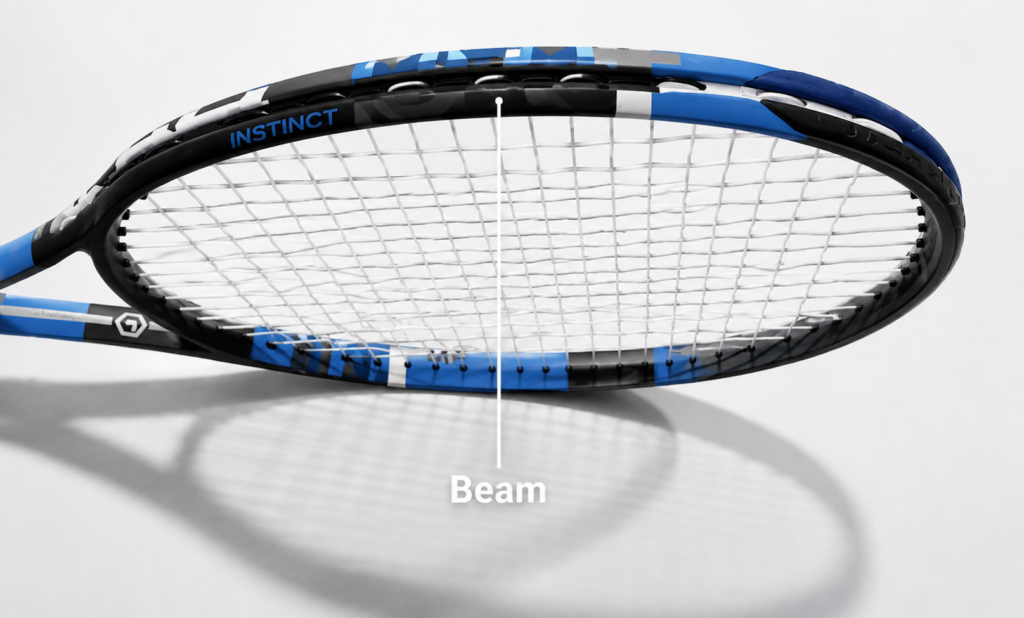
If you’ve never heard the term before, don’t worry. Beam width simply refers to the thickness of the racquet’s frame.
Although it doesn’t receive as much attention as weight or head size, the thickness of a racquet’s frame can noticeably affect how it performs. In general, thicker frames provide more power and stability, while thinner frames tend to offer greater feel and control.
In this guide, we’ll explain what frame thickness is, why it matters and how it can influence your game.
Quick Answer
Beam width is the measurement of how thick a tennis racquet’s frame is.
Generally:
- Thicker frames provide more power.
- Thinner frames offer greater feel and control.
- Most modern racquets have frame thicknesses between 20 mm and 27 mm.
There isn’t a “best” frame thickness. The right choice depends on your playing style and personal preference.
What Is Beam Width?
The frame is the outer structure of a tennis racquet that surrounds the strings.
Beam width is simply the manufacturer’s measurement of how thick that frame is.
Manufacturers measure frame thickness in millimetres (mm).
Some racquets have the same thickness all the way around the frame, while others vary depending on the location.
For example:
23 / 26 / 23 mm
This means:
- 23 mm near the handle
- 26 mm around the head
- 23 mm near the throat
Many modern racquets use this type of variable frame thickness to balance power, stability and feel.
Why Does Frame Thickness Matter?
The thickness of the frame affects several characteristics of a racquet, including:
- Power
- Stability
- Feel
- Comfort
- Flexibility
- Control
Frame thickness works together with the racquet’s weight, balance, stiffness and head size to create its overall playing characteristics.
Thin Frames
Frames measuring around 20–22 mm are generally considered thin.
These racquets have traditionally been popular with advanced players who generate their own power and value precision.
Advantages
- Excellent feel
- Greater touch around the net
- Softer response
- Better feedback
- More precise shot-making
Disadvantages
- Less free power
- Requires faster swing speeds
- Less forgiving on off-centre shots
- Smaller effective sweet spot
Medium-Thickness Frames
Frames measuring 23–25 mm offer an excellent balance between power and control.
Many of today’s most popular all-round racquets fall into this category.
Advantages
- Balanced performance
- Good power
- Good control
- Comfortable feel
- Suitable for a wide range of players
Disadvantages
- Doesn’t strongly favour either power or precision
Thick Frames
Frames measuring 26 mm or more are generally designed to maximise power and forgiveness.
Many beginner and game-improvement racquets use thicker frames.
Advantages
- Easy power
- Excellent stability
- Larger sweet spot feel
- Forgiving on off-centre shots
- Less effort required to hit deep shots
Disadvantages
- Firmer feel
- Less touch
- Reduced feedback
- Can feel less connected to the ball
Comparing Frame Thickness
| Frame Thickness | Power | Feel | Control | Forgiveness | Best For |
|---|---|---|---|---|---|
| 20–22 mm | ⭐⭐⭐☆☆ | ⭐⭐⭐⭐⭐ | ⭐⭐⭐⭐⭐ | ⭐⭐⭐☆☆ | Advanced players |
| 23–25 mm | ⭐⭐⭐⭐☆ | ⭐⭐⭐⭐☆ | ⭐⭐⭐⭐☆ | ⭐⭐⭐⭐☆ | Most club players |
| 26–28 mm | ⭐⭐⭐⭐⭐ | ⭐⭐⭐☆☆ | ⭐⭐⭐☆☆ | ⭐⭐⭐⭐⭐ | Beginners and power players |
Does a Thicker Frame Produce More Power?
Generally, yes.
A thicker frame is usually stiffer, meaning it bends less when the ball strikes the strings.
Because less energy is absorbed by the frame, more energy is returned to the ball.
The result is easier access to power, particularly for players with shorter or slower swings.
Does a Thinner Frame Offer More Control?
Many players believe so.
Thinner frames often provide more feedback at impact, allowing players to feel exactly where the ball met the strings.
However, it’s important to remember that control depends on many factors, including:
Frame thickness is only one piece of the puzzle.
Does Frame Thickness Affect Comfort?
Yes—but not on its own.
Thinner frames are often more flexible, which can make them feel softer during impact.
Thicker frames are typically stiffer and may transfer more vibration into the player’s arm.
However, comfort is also influenced by:
- String type
- String tension
- Grip size
- Racquet weight
For example, a thick-framed racquet fitted with soft multifilament strings may feel more comfortable than a thin-framed racquet strung tightly with polyester.
Which Frame Thickness Do Professionals Use?
Professional players use racquets with a variety of frame thicknesses.
Many control-oriented racquets used on the ATP and WTA Tours have relatively thin frames.
Others use medium-thickness frames that combine modern power with excellent control.
Very few professionals use the thickest game-improvement racquets sold to beginners.
It’s also worth remembering that many professionals customise their racquets, so the specifications available in stores don’t always match the equipment they use in competition.
Which Frame Thickness Is Best for Beginners?
Most beginners will benefit from a racquet with a medium or thicker frame.
These racquets provide:
- Easier power
- Greater forgiveness
- Better stability
- Less effort to hit deep shots
As players improve and develop faster swings, they may decide they prefer the feel and precision of a thinner frame.
How Frame Thickness Works with Other Racquet Specifications
Frame thickness should never be considered on its own.
For example:
Thick Frame + Large Head Size
This combination produces a powerful, forgiving racquet that’s ideal for many recreational players.
Thin Frame + Smaller Head Size
This creates a control-oriented racquet that rewards players with sound technique.
Thick Frame + High Swingweight
Excellent stability and power, but it may feel demanding over long matches.
Thin Frame + Flexible Racquet
Often delivers exceptional feel, making it popular with players who enjoy variety, touch and precision.
Common Myths
“A thicker frame is always better.”
False.
While thicker frames provide more power, many players prefer the feel and control of thinner frames.
“Only professionals use thin frames.”
False.
Many club players enjoy the comfort and feedback of thinner-framed racquets.
“Frame thickness doesn’t matter.”
It does.
Although it’s not the most important specification, it contributes to the way a racquet feels and performs.
“A thicker frame means no control.”
Not true.
Modern racquet technology allows many thicker-framed racquets to deliver excellent control while still providing easy power.
Frequently Asked Questions
What is beam width on a tennis racquet?
Beam width is simply the measurement of the racquet’s frame thickness, expressed in millimetres.
What frame thickness is best?
There isn’t a single best option.
Most recreational players are well suited to frames measuring between 23 mm and 25 mm, which offer an excellent balance of power and control.
Does a thicker frame produce more power?
Generally, yes.
Thicker frames are usually stiffer and return more energy to the ball.
Why do some racquets have different frame thicknesses?
Many manufacturers use a variable frame thickness to improve stability, comfort and overall performance.
Should beginners choose a thick frame?
For most beginners, yes.
A thicker frame provides easier power and greater forgiveness while players develop their technique.
Final Thoughts
Frame thickness is one of the most overlooked racquet specifications, but it has a meaningful impact on how a racquet feels and performs.
A thicker frame generally offers more power, stability and forgiveness, making it an excellent choice for beginners and players looking for easy depth. A thinner frame typically provides greater feel, touch and precision, appealing to players who generate their own pace and value control.
Rather than focusing on frame thickness alone, consider it alongside weight, balance, head size, swingweight, stiffness, string pattern and string setup. Together, these factors determine how a racquet performs and which one is best suited to your game.
Continue Reading
- Tennis Racquet Stiffness Explained
- Tennis Racquet Sweet Spot Explained
- Tennis Racquet Weight Explained
- Tennis Racquet Head Size Explained
Read more of our instructional articles here.
Read more of our player focus articles here.
Follow The Tennis Site on X: @thetennissite
Follow Todd Scoullar on X: @toddscoullar

Comments are closed, but trackbacks and pingbacks are open.