
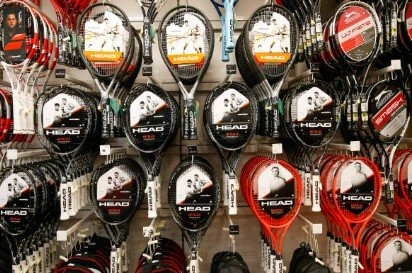
When shopping for a tennis racquet, one of the first specifications you’ll notice is the head size.
You’ll see numbers such as 98 sq in, 100 sq in or 105 sq in, but what do they actually mean?
Many players assume that a larger head automatically makes a racquet better, while others believe smaller heads offer superior control. As with most tennis equipment, the truth is more nuanced.
Head size influences the size of the sweet spot, the amount of power a racquet can produce and how forgiving it is on off-centre shots. Understanding these differences will help you choose a racquet that matches your game.
Embed from Getty ImagesQuick Answer
Head size is the area of the racquet’s string bed, measured in square inches (or square centimetres).
- Smaller heads generally offer more control and precision.
- Larger heads generally provide more power and forgiveness.
For most recreational players, a 100-square-inch racquet offers an excellent balance of power, control and manoeuvrability.
What Is Racquet Head Size?
Head size refers to the surface area inside the racquet frame where the strings are installed.
Manufacturers almost always measure head size in square inches (sq in), although some also list the equivalent measurement in square centimetres.
Common head sizes include:
- 95 sq in
- 98 sq in
- 100 sq in
- 102 sq in
- 105 sq in
The larger the number, the larger the string bed.
Why Does Head Size Matter?
Head size affects several aspects of performance, including:
- Sweet spot size
- Power
- Control
- Forgiveness
- Spin potential
- Confidence on off-centre shots
It’s one of the most noticeable differences between racquets, particularly for recreational players.
Embed from Getty ImagesSmall Head Sizes (95–98 sq in)
Smaller racquet heads are traditionally associated with advanced players.
Because the string bed is smaller, players often enjoy greater precision and a more connected feel.
However, the sweet spot is also smaller, making clean ball striking more important.
Advantages
- Excellent control.
- Greater precision.
- More direct feel.
- Favoured by many advanced players.
- Easier to place the ball accurately.
Disadvantages
- Smaller sweet spot.
- Less forgiving.
- Requires consistent timing.
- Can produce less free power.
Mid-Plus Head Sizes (99–102 sq in)
Today, this is the most popular category in tennis.
A 100-square-inch racquet has become the standard choice for players at almost every level because it combines many of the advantages of both smaller and larger heads.
Advantages
- Balanced power and control.
- Generous sweet spot.
- Suitable for a wide range of playing styles.
- Easy to adapt to.
- Excellent all-round performance.
Disadvantages
- Doesn’t specialise in one area.
- Advanced players seeking maximum precision may prefer a smaller head.
Oversize Head Sizes (103–110+ sq in)
Oversize racquets provide the largest sweet spots and are often recommended for beginners or players seeking extra power.
The larger string bed helps reduce the impact of off-centre hits.
Advantages
- Large sweet spot.
- Easy power.
- Forgiving.
- Comfortable to use.
- Helpful for players with shorter swings.
Disadvantages
- Slightly less control.
- Can launch the ball higher.
- May feel less precise during aggressive swings.
Head Size Comparison
| Head Size | Power | Control | Sweet Spot | Forgiveness | Typical Player |
|---|---|---|---|---|---|
| 95–98 sq in | ⭐⭐⭐☆☆ | ⭐⭐⭐⭐⭐ | ⭐⭐⭐☆☆ | ⭐⭐⭐☆☆ | Advanced |
| 99–102 sq in | ⭐⭐⭐⭐☆ | ⭐⭐⭐⭐☆ | ⭐⭐⭐⭐☆ | ⭐⭐⭐⭐☆ | Most players |
| 103–110+ sq in | ⭐⭐⭐⭐⭐ | ⭐⭐⭐☆☆ | ⭐⭐⭐⭐⭐ | ⭐⭐⭐⭐⭐ | Beginners & recreational |
Does a Larger Head Produce More Power?
Generally, yes.
A larger head size allows the strings to deform more during impact, creating a greater trampoline effect.
This can make it easier to generate depth and pace without swinging harder.
However, power is influenced by many factors, including:
- Swingweight
- String tension
- String type
- Racquet stiffness
- Technique
- Racquet balance
Head size is only one part of the equation.
Does a Smaller Head Offer More Control?
In many cases, yes.
Smaller heads tend to produce a more predictable response, particularly for players who consistently strike the centre of the strings.
Because advanced players generate their own power, they often value precision more than additional forgiveness.
Embed from Getty Images EmbedDoes Head Size Affect Spin?
Yes, but not as much as many players think.
Modern spin is created primarily through:
- Technique
- Racquet-head speed
- String movement
- String type
Head size can influence spin indirectly by affecting launch angle and string movement, but it’s far from the most important factor.
Many of today’s best spin players use 100-square-inch racquets rather than smaller models.
Which Head Size Do Professionals Use?
Professional players use a surprisingly narrow range of head sizes.
The majority of ATP and WTA professionals use racquets between 97 and 100 square inches.
Although there are exceptions, very few professionals use oversize racquets.
This reflects the importance of balancing power, control and manoeuvrability at the highest level.
Which Head Size Is Best for Beginners?
For most beginners, a racquet between 100 and 105 square inches is an excellent choice.
These racquets provide:
- A larger sweet spot.
- Greater forgiveness.
- Easier access to power.
- More confidence on off-centre shots.
As players improve, some choose to move to slightly smaller head sizes, although many continue using 100-square-inch racquets throughout their playing careers.
Common Myths
“Professional players use tiny racquets.”
Not anymore.
While smaller heads were common in previous decades, most modern professionals use racquets between 97 and 100 square inches.
“Larger heads have no control.”
False.
Many modern 100-square-inch racquets offer outstanding control while remaining forgiving.
Embed from Getty Images“A bigger racquet is always better for beginners.”
Not necessarily.
An extremely large head can sometimes feel less manoeuvrable.
For most new players, around 100–105 square inches provides an excellent balance.
“Head size is the most important racquet specification.”
No.
Weight, balance, swingweight, strings and tension all play significant roles in how a racquet performs.
Head size should always be considered alongside these other factors.
Frequently Asked Questions
What is the most popular tennis racquet head size?
Today, 100 square inches is the most popular head size among recreational players and many professionals.
Is a 98 or 100 square inch racquet better?
Neither is universally better.
A 98-square-inch racquet typically offers slightly more precision, while a 100-square-inch racquet usually provides a larger sweet spot and easier power.
Is a bigger racquet head easier to use?
Generally, yes.
A larger head offers a bigger sweet spot and is more forgiving on off-centre shots.
Do professionals use 100-square-inch racquets?
Yes.
Many of the world’s top players use racquets with 100-square-inch heads, while others prefer 97 or 98 square inches.
Should beginners use an oversize racquet?
Many beginners benefit from head sizes between 100 and 105 square inches, but there’s no need to choose the largest racquet available.
Final Thoughts
Head size is one of the easiest racquet specifications to understand, but it’s also one of the most misunderstood.
A larger head provides more forgiveness and power, while a smaller head offers greater precision and feel. Neither is inherently better—the ideal choice depends on your experience, technique and playing style.
For most players, a 100-square-inch racquet represents an excellent middle ground, offering enough power for easy depth while retaining the control needed to play with confidence.
Remember that head size is only one part of the puzzle. The best racquet is the one that combines the right weight, balance, swingweight, strings and head size to suit your individual game.
- Tennis Swingweight Explained
- Tennis Racquet Balance Explained
- Tennis Racquet Weight Explained
- Tennis String Types Explained
Read more of our instructional articles here.
Read more of our player focus articles here.
Follow The Tennis Site on X: @thetennissite
Follow Todd Scoullar on X: @toddscoullar

Comments are closed, but trackbacks and pingbacks are open.