
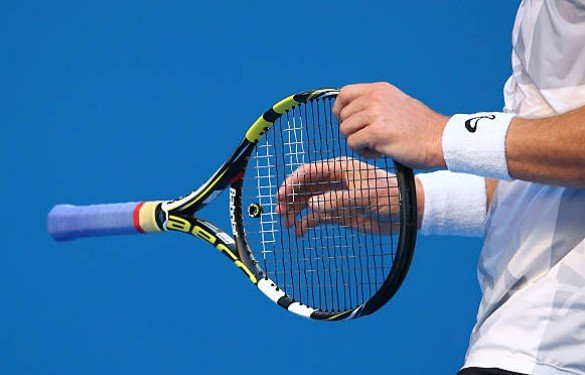
Walk into any tennis shop and you’ll quickly notice that racquets come in a wide range of weights.
Some weigh less than 270 grams, while others exceed 340 grams once they’re strung. So, how do you know which one is right for you?
The answer isn’t simply “lighter is better” or “heavier is better.”
A racquet’s weight influences almost every aspect of its performance, including power, control, stability, manoeuvrability and comfort. Choosing the right weight can make the game easier and more enjoyable, while choosing the wrong one may lead to inconsistent shots or unnecessary fatigue.
This guide explains how racquet weight works and how to choose the best option for your game.
Quick Answer
Most recreational adult players are best suited to a racquet weighing 285–305 grams (unstrung).
- Lighter racquets are easier to swing and manoeuvre.
- Heavier racquets provide greater stability and control.
There isn’t one perfect weight for every player. The best choice depends on your strength, experience and playing style.
What Does Tennis Racquet Weight Mean?
Racquet weight refers to how much the racquet weighs before or after it is strung.
Most manufacturers list the unstrung weight, as this provides a consistent way to compare different models.
Once strings and an overgrip are added, the racquet will typically weigh 15–20 grams more.
Always compare racquets using the same measurement—either all unstrung or all strung.
Why Does Racquet Weight Matter?
Weight affects almost everything about how a racquet performs.
A heavier racquet behaves differently during impact than a lighter one, changing how much power, stability and feel the player experiences.
The challenge is finding the right balance between stability and manoeuvrability.
Embed from Getty ImagesLighter Racquets
Lightweight racquets are easier to swing quickly.
Because they require less effort, they’re often recommended for beginners, juniors and players who prefer fast racquet-head speed.
Advantages
- Easier to manoeuvre.
- Faster swing speed.
- Less tiring over long matches.
- Easier for beginners.
- Quicker reactions at the net.
Disadvantages
- Less stable against hard hitters.
- Can twist more on off-centre shots.
- Often produces less natural power.
- May transmit more vibration.
Heavier Racquets
Heavier racquets require more strength to swing but reward players with greater stability and control.
Advanced players often prefer additional weight because the racquet absorbs incoming pace more effectively and remains stable during contact.
Advantages
- Greater stability.
- More control.
- Better against powerful opponents.
- Improved feel.
- More solid impact.
Disadvantages
- Harder to swing.
- Can cause fatigue.
- Slower at the net.
- Requires better technique.
Weight Categories
Although manufacturers vary, racquets generally fall into these categories.
| Weight (Unstrung) | Category | Best For |
|---|---|---|
| Under 270 g | Lightweight | Juniors and beginners |
| 270–285 g | Light | Recreational players |
| 285–305 g | Medium | Most club players |
| 305–320 g | Heavy | Advanced players |
| Over 320 g | Tour Weight | Highly experienced competitors |
These categories are guidelines rather than strict rules.
Does a Heavier Racquet Produce More Power?
Not necessarily.
Many people assume a heavier racquet automatically creates more power.
In reality, power comes from a combination of:
- Swing speed
- Timing
- Technique
- Racquet design
- String setup
A heavier racquet carries more momentum through the ball, but if it’s too heavy to swing comfortably, you’ll often lose racquet-head speed.
For many players, a slightly lighter racquet actually produces better results because they can swing faster and more confidently.
Does Weight Affect Spin?
Yes.
Spin depends largely on racquet-head speed.
If a lighter racquet allows you to swing faster, you may generate more topspin.
However, heavier racquets also provide greater stability, allowing advanced players to hit through the ball with confidence.
This is why professionals use a wide range of racquet weights.
Which Weight Should Beginners Choose?
For most beginners, a racquet between 270 and 290 grams (unstrung) offers an excellent balance.
It provides enough stability without becoming difficult to swing.
As players improve their strength and technique, many gradually move towards slightly heavier racquets.
Which Weight Do Professionals Use?
Professional players generally use heavier racquets than recreational players.
Many ATP and WTA professionals use customised racquets weighing well over 320 grams when strung, although the exact weight varies from player to player.
These racquets are matched to each player’s technique, physical strength and playing style.
Because of this customisation, professional equipment isn’t necessarily the best choice for recreational players.
Common Myths
“Heavier racquets are always better.”
False.
The best racquet is the one you can swing comfortably for an entire match.
“Beginners should buy the lightest racquet.”
Not always.
An extremely light racquet can feel unstable and make it harder to develop consistent technique.
Most beginners benefit from a racquet that offers a balance of manoeuvrability and stability.
“Professionals use the racquets sold in shops.”
Not exactly.
Many professionals use customised versions of retail racquets with added weight, modified balance and personalised string setups.
The racquet may look the same as the retail model, but it often performs quite differently.
Embed from Getty ImagesFrequently Asked Questions
What is a good tennis racquet weight?
For most adult recreational players, 285–305 grams (unstrung) is an excellent starting point.
Is a heavier racquet more powerful?
It can be, but only if you can swing it comfortably.
Technique and racquet-head speed remain the biggest factors.
Should beginners use a light racquet?
Yes, but not one that’s excessively light.
A moderately light racquet is usually the best choice for learning proper technique.
Do professionals use heavy racquets?
Yes.
Most professional players use customised racquets that are heavier than standard retail specifications.
Final Thoughts
Racquet weight is one of the most important specifications to consider when buying a tennis racquet.
Lighter racquets offer speed and manoeuvrability, while heavier racquets provide stability and control. Neither is automatically better—the ideal choice depends on your strength, experience and style of play.
If you’re unsure where to start, choose a racquet in the middle weight range and focus on finding one that feels comfortable throughout an entire hitting session. A racquet you can swing confidently will almost always outperform one that’s simply heavier or lighter on paper.
Continue Reading
- The Ultimate Tennis Glossary
- Tennis Grips Explained
- How to Hold a Tennis Racquet
- Tennis Grip Size Guide
Read more of our instructional articles here.
Read more of our player focus articles here.
Follow The Tennis Site on X: @thetennissite
Follow Todd Scoullar on X: @toddscoullar

Comments are closed, but trackbacks and pingbacks are open.