
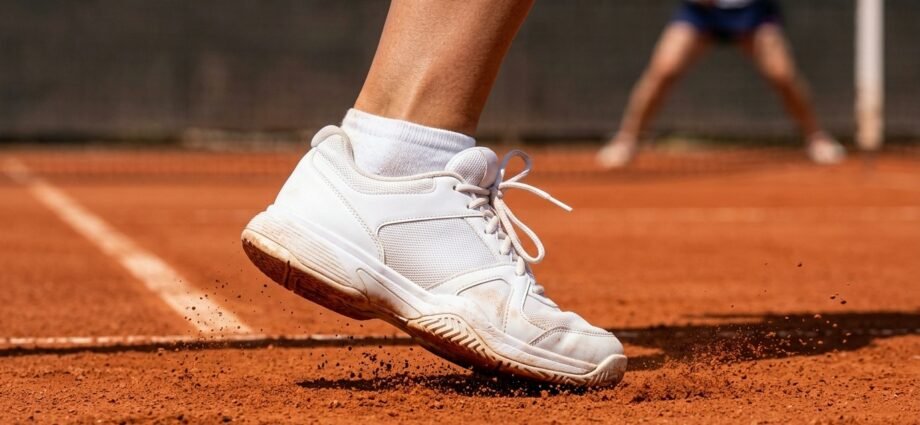
Tennis is a sport of extreme dynamics. A single point can demand a rapid baseline sprint, a sudden deceleration, an explosive lateral cut, and a vertical leap at the net. While player focus is naturally on racquet position and ball trajectory, the mechanical foundation of every successful shot begins at the feet.
Among the complex structures of the human foot, the subtalar joint plays a defining role in court performance and injury prevention. Understanding how this joint operates under court-specific forces—and how to stabilize it—is essential for any tennis player looking to stay active and injury-free.
The Biomechanics of the Subtalar Joint on Court
Located just below the ankle joint, the subtalar joint is responsible for the inward and outward tilting of the foot, known as inversion and eversion. This movement is what allows your foot to adapt to uneven surfaces and absorb impact.
During linear movements like running, foot mechanics are relatively predictable. In tennis, however, the forces are multidirectional. When a player slides laterally to reach a wide forehand and plants their foot, the subtalar joint is subjected to massive shear forces.
Upon planting the foot, the subtalar joint naturally pronates (rolls inward) to absorb the shock of the court surface. This is followed immediately by rapid supination (rolling outward) to turn the foot into a rigid lever, allowing the player to push off and recover back to the center of the court.
If the subtalar joint is unstable or collapses excessively during this transition, it triggers a chain reaction of misalignment up the leg, placing abnormal strain on the plantar fascia, ankle ligaments, and the patellar tendon.
The Cost of Overpronation: From Ankle Rolls to Knee Pain
When the subtalar joint collapses inward too far or too fast, it is referred to as overpronation. In tennis players, chronic overpronation under heavy loads can lead to several common overuse injuries:
- Plantar Fasciitis: Excessive pronation pulls and stretches the plantar fascia—the thick band of tissue running along the bottom of the foot. Repetitive micro-tears lead to the classic sharp heel pain experienced during early morning steps.
- Ankle Instability: If the subtalar joint cannot quickly transition from pronation to supination, the ankle is left in a vulnerable, unlocked state during quick lateral cuts, increasing the risk of lateral ankle sprains.
- Knee and Hip Strain: As the foot rolls inward, it forces the tibia (shinbone) to rotate internally. This rotation travels up the leg, altering patellar tracking and causing knee pain (often diagnosed as runner’s knee) and hip stiffness.
Restoring Subtalar Joint Alignment with Orthotics
While standard tennis shoes offer durable rubber outsoles and outer lateral reinforcement to prevent rolled ankles, their interior design rarely provides the structural support required to stabilize the subtalar joint. The standard factory insoles are typically flat foam pieces that compress instantly under weight.
To maintain proper alignment during high-impact cuts, players can benefit from utilizing firm, medical-grade arch support inserts inside their court shoes. High-quality orthotic inserts feature a semi-rigid nylon arch shell that acts as a physical block, limiting excessive inward rolling of the subtalar joint under load.
Furthermore, a deep, structured heel cup cradles the calcaneus (heel bone). By keeping the heel bone vertical and aligned, the insert stabilizes the subtalar joint at its foundation, ensuring that impact forces are distributed evenly across the foot rather than concentrating on the inner arch or ankle ligaments.
Practical Exercises and Advice for Players
To protect your subtalar joint and prolong your playing years, consider the following court footwear tips:
- Check the Torsional Rigidity: Grab your tennis shoe and try to twist it. A good court shoe should resist twisting in the midfoot. If the shoe bends easily in the middle, it will not support your subtalar joint during lateral slides.
- Intrinsic Foot Strengthening (Towel Scrunches): Lay a small towel flat on the floor, place your bare foot on it, and use your toes to scrunch the towel toward you. This strengthens the small intrinsic muscles that support the foot’s arch.
- Tibialis Posterior Strengthening (Single-Leg Calf Raises): Stand on one foot near a wall for balance, and slowly raise up onto your toes, then lower back down. This strengthens the tibialis posterior muscle, which is the primary dynamic stabilizer of the subtalar joint.
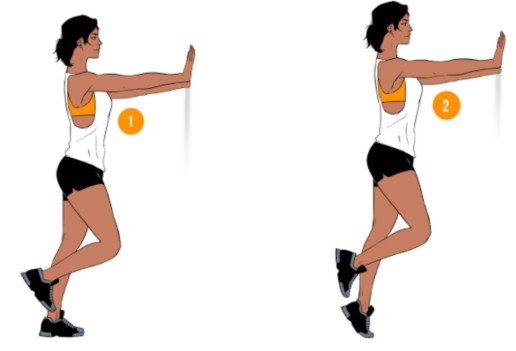
- Peroneal Strengthening (Ankle Eversion Band Exercises): Wrap a resistance band around the outside of your foot, anchor the other end, and sweep your foot outward against the resistance. This strengthens the peroneal muscles on the outside of the ankle, which help prevent rolls during lateral cuts.
- Incorporate Dynamic Calf Stretches: Tight calves restrict ankle mobility, forcing the arch to flatten even more to compensate. Stretch your calves before and after every match.
- Give Shoes Time to Recover: If you play multiple times a week, rotate between two pairs of court shoes to allow the foam cushioning to decompress between sessions.
- Incorporate Balance Exercises: Standing on one foot on a foam pad or balance board strengthens the stabilizer muscles around the subtalar joint, improving dynamic balance on the court.
Tennis demands a strong foundation. By prioritizing subtalar joint stability through proper footwear support and active strengthening, you can protect your joints, improve your court movement, and stay in the game pain-free.
Authored by: Ethan Lin | VALSOLE Biomechanics Specialist
Read more of our instructional articles here.
Read more of our exclusive feature articles here.
Follow The Tennis Site on X: @thetennissite

Comments are closed, but trackbacks and pingbacks are open.