
Quick Answer
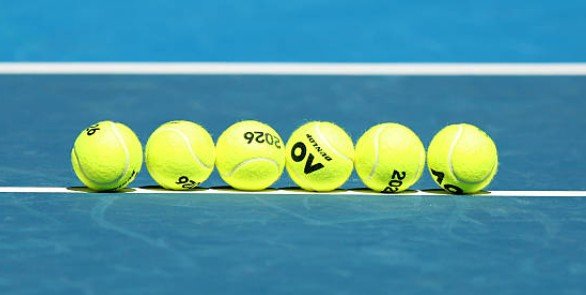
Tennis balls are yellow because they are much easier to see.
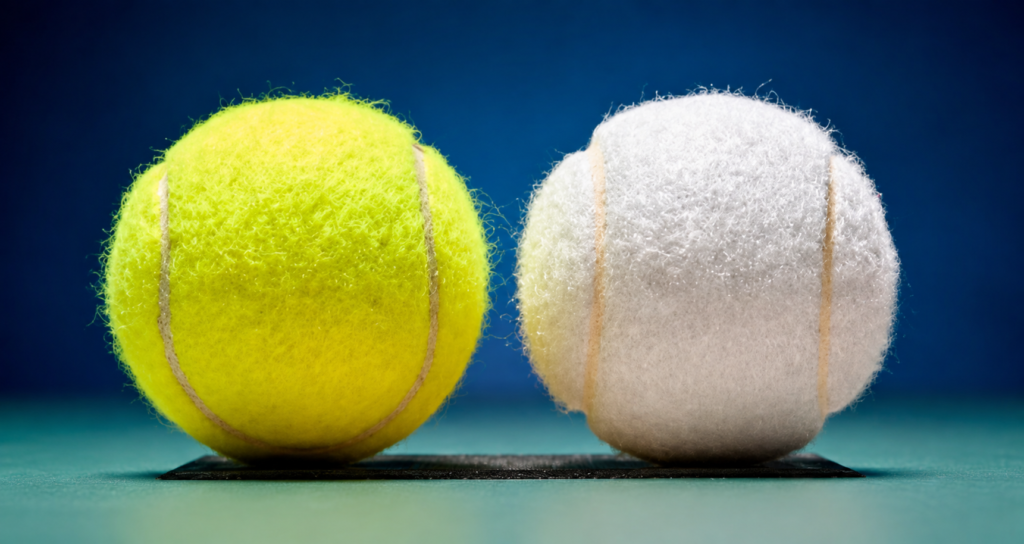
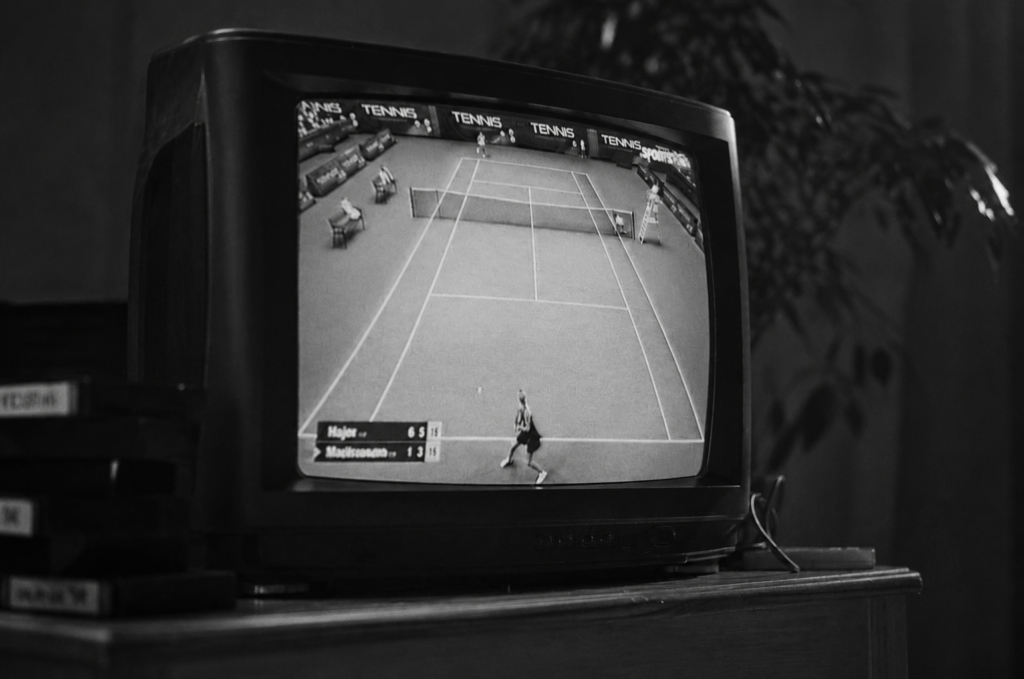
Before 1972, tennis balls were usually white. However, with the rise of colour television, researchers found that fluorescent yellow balls were far more visible to viewers and players alike.
Today, almost every professional and recreational tennis ball is fluorescent yellow.
Were Tennis Balls Always Yellow?
No.
For much of tennis history, white tennis balls were the standard.
Early lawn tennis, which became popular in the late 1800s, was played almost exclusively with white balls. They contrasted well against the darker clothing and grass courts of the era.
As tennis evolved, white remained the standard for decades.
If you’d like to learn more about modern tennis balls, see Tennis Balls Explained.
Why Did Tennis Balls Change Colour?
The biggest reason was television.
During the late 1960s and early 1970s, colour television became increasingly common around the world.
While white tennis balls looked fine in person, broadcasters discovered they were often difficult to follow on television.
Researchers tested several colours to determine which stood out best against different court surfaces and backgrounds.
Fluorescent yellow proved to be the easiest colour to see.
The International Tennis Federation Makes the Change
In 1972, the International Tennis Federation (ITF) officially approved fluorescent yellow tennis balls for competition.
Players gradually adopted the new colour over the following years.
Some tournaments continued using white balls for a short time, but by the late 1970s fluorescent yellow had become the worldwide standard.
Why Is Yellow Easier to See?
Human eyes are particularly sensitive to yellow-green colours.
Fluorescent yellow provides excellent contrast against:
- Blue hard courts
- Green grass
- Red clay
- Dark stadium backgrounds
It also remains highly visible under bright sunlight and artificial lights.
This makes it easier for:
- Players
- Umpires
- Line judges
- Spectators
- Television viewers
to track the ball during fast rallies.
Are Tennis Balls Actually Yellow?
Interestingly, many people describe tennis balls as green rather than yellow.
This has even become the subject of online debates.
Officially, however, the ITF describes the colour as yellow.
The fluorescent dye used gives the ball a yellow-green appearance, which explains why opinions differ.
Do Professional Players Use Different Colours?
No.
Professional players use the same fluorescent yellow balls found in most sporting goods stores.
Different tournaments may use different brands, but the colour remains virtually identical.
Are White Tennis Balls Still Made?
Yes, although they’re uncommon.
White tennis balls are still available for:
- Coaching demonstrations
- Vintage tennis events
- Decorative purposes
- Some recreational use
However, they’re rarely seen in competitive tennis.
Does Colour Affect Performance?
No.
The colour has no impact on:
- Bounce
- Speed
- Spin
- Durability
It simply makes the ball easier to see.
Common Myths
“Tennis balls are yellow because they’re easier to manufacture.”
False.
The colour change was made to improve visibility, particularly for television broadcasts.
“Professional players requested yellow balls.”
Not directly.
The change was driven largely by broadcasters and visibility testing rather than player demand.
“Tennis balls are actually green.”
Officially, they are classified as yellow, even though many people perceive them as yellow-green.
Frequently Asked Questions
Why were tennis balls originally white?
White balls contrasted well with the traditional clothing and grass courts used in early tennis.
When did tennis balls become yellow?
The ITF approved fluorescent yellow tennis balls in 1972, and they gradually became the worldwide standard during the 1970s.
Are tennis balls really yellow or green?
Officially they are yellow, although their fluorescent colouring causes many people to see them as green.
Do all professional tournaments use yellow tennis balls?
Yes.
Virtually every professional tournament now uses fluorescent yellow tennis balls.
Does the colour change how the ball plays?
No.
The colour only affects visibility.
Final Thoughts
The bright yellow tennis ball is now one of the most recognisable pieces of sporting equipment in the world, but it wasn’t always that way.
For almost a century, white balls dominated the game. It was only with the arrival of colour television that tennis adopted fluorescent yellow, dramatically improving visibility for players and millions of viewers watching from home.
More than fifty years later, that decision remains one of the most successful equipment changes in the sport’s history.
Continue Reading
- Tennis Balls Explained
- Pressurized vs Pressureless Tennis Balls
- When Should You Replace Tennis Balls?
- Tennis Ball Types Explained
- Tennis Balls: The Complete Guide
Read more of our instructional articles here.
Read more of our player focus articles here.
Follow The Tennis Site on X: @thetennissite
Follow Todd Scoullar on X: @toddscoullar

Comments are closed, but trackbacks and pingbacks are open.