
Quick Answer
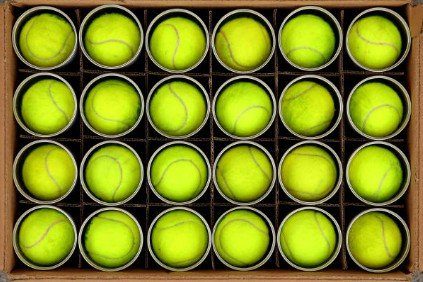
Although tennis balls may look almost identical, they are designed for different surfaces, players and playing conditions.
The main categories include:
- Extra Duty – Best for hard courts.
- Regular Duty – Best for clay and indoor courts.
- Pressureless – Best for coaching and ball machines.
- Junior Balls – Red, orange and green balls designed for developing players.
- High Altitude Balls – Designed for locations above approximately 1,200 metres (4,000 feet).
Choosing the right tennis ball improves durability, consistency and overall playing experience.
What Is a Tennis Ball Made Of?
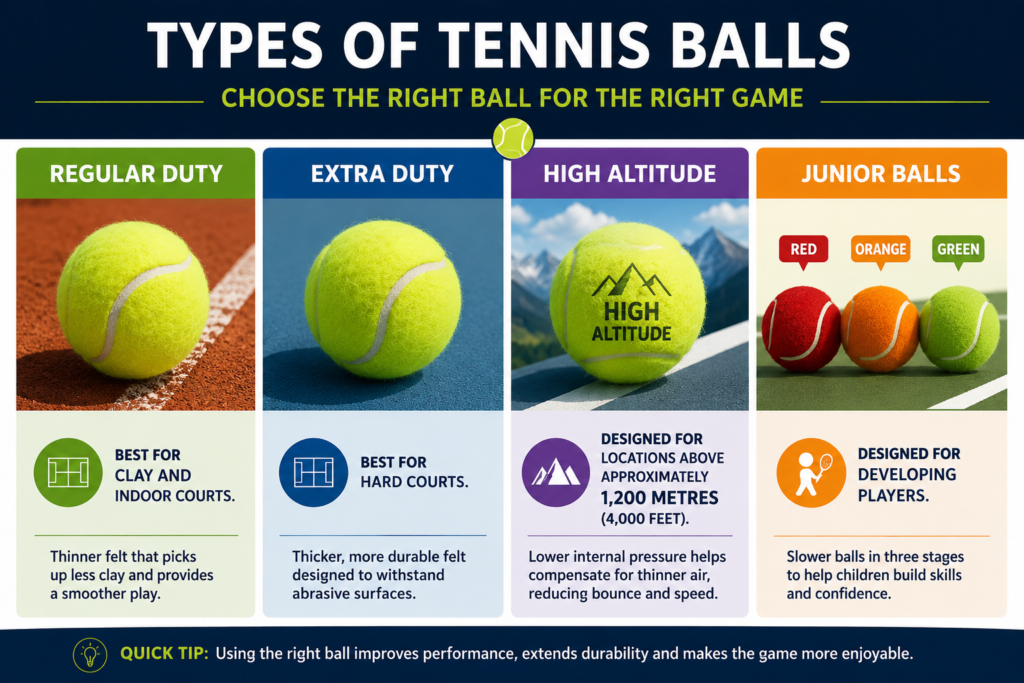
A modern tennis ball consists of two main parts:
- A hollow rubber core
- A woven felt covering
The rubber determines how the ball bounces, while the felt affects speed, spin and durability.
Although this construction has remained largely unchanged for decades, manufacturers continually refine materials to improve consistency.
For a more detailed explanation, read Tennis Balls Explained.
The Different Types of Tennis Balls
There isn’t just one type of tennis ball.
Different conditions require different designs.
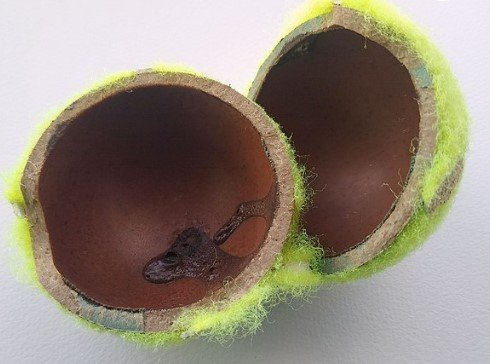
Extra Duty
Designed for hard courts.
The thicker felt resists wear from abrasive surfaces and is the most common choice for recreational players.
Regular Duty
Designed for clay and indoor courts.
The thinner felt collects less clay and provides a smoother playing experience.
Pressureless Balls
These balls use a thicker rubber core rather than internal air pressure.
They’re ideal for:
- Coaching
- Ball machines
- Frequent practice
Read Pressurized vs Pressureless Tennis Balls for a full comparison.
Junior Tennis Balls
Children learn using slower balls that are easier to control.
These include:
- Red Balls
- Orange Balls
- Green Balls
Each stage gradually prepares players for standard yellow balls.
Read Tennis Ball Types Explained for more information.
Why Are Tennis Balls Yellow?
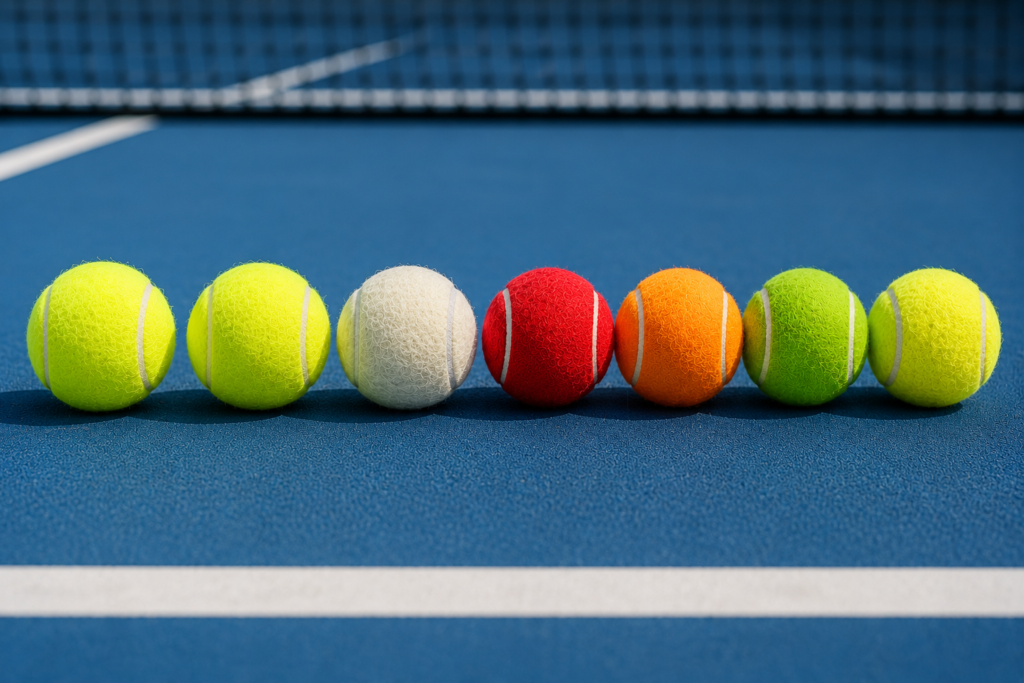
Until the early 1970s, tennis balls were almost always white.
As colour television became more popular, fluorescent yellow balls proved much easier for viewers to see.
Today, fluorescent yellow is the worldwide standard.
Learn more in Why Are Tennis Balls Yellow?
How Long Do Tennis Balls Last?
All tennis balls eventually wear out.
Pressurized balls gradually lose internal pressure after the can is opened.
Pressureless balls maintain their bounce much longer but eventually lose their felt.
Typical lifespan:
| Ball Type | Approximate Lifespan |
|---|---|
| Professional match balls | Several games |
| Club play | 2–6 sessions |
| Social play | Several weeks |
| Pressureless balls | Months or longer |
See When Should You Replace Tennis Balls? for more detail.
Which Tennis Ball Should You Buy?
Hard Court Players
Extra duty balls are generally the best option because of their durable felt.
Clay Court Players
Regular duty balls perform better as they collect less clay.
Beginners
Standard pressurized extra duty balls are ideal for most adults starting the game.
Children should use the appropriate red, orange or green stage balls.
Coaches
Pressureless balls offer outstanding value for feeding drills and ball machines.
What Makes a Good Tennis Ball?
High-quality tennis balls provide:
- Consistent bounce
- Durable felt
- Reliable flight
- Comfortable feel
- Uniform performance
The best brands maintain these characteristics for as long as possible.
Popular Tennis Ball Brands
Several manufacturers produce high-quality tennis balls used at different levels of the sport.
Among the best-known are:
- Wilson
- Dunlop
- Penn
- Head
- Tecnifibre
- Slazenger
- Babolat
Each brand offers balls suited to different surfaces and levels of play.
Frequently Asked Questions
What type of tennis ball do professionals use?
Professional tournaments use pressurized tennis balls supplied by the tournament’s official ball manufacturer.
What’s the difference between extra duty and regular duty?
Extra duty balls have thicker felt for hard courts, while regular duty balls have thinner felt designed for clay and indoor courts.
Are pressureless balls better?
They are better for coaching and practice because they last much longer, but most players prefer pressurized balls for matches.
Why are tennis balls yellow?
Fluorescent yellow provides much better visibility than white, especially for television and spectators.
How often should tennis balls be replaced?
That depends on how often you play, but most recreational players replace pressurized balls every few sessions.
Final Thoughts
Tennis balls may seem simple, but choosing the right type can have a noticeable impact on your game. Factors such as the court surface, your skill level and how often you play all influence which ball will perform best.
For most recreational players, extra duty pressurized balls remain the ideal choice, while pressureless balls are excellent for practice and coaching. Understanding the differences between the various types will help you get better value from your equipment and enjoy more consistent tennis.
Continue Reading
- Tennis Balls Explained
- Pressurized vs Pressureless Tennis Balls
- Tennis Ball Types Explained
- Why Are Tennis Balls Yellow?
- When Should You Replace Tennis Balls?
Read more of our instructional articles here.
Read more of our news articles here.
Follow The Tennis Site on X: @thetennissite
Follow Todd Scoullar on X: @toddscoullar

Comments are closed, but trackbacks and pingbacks are open.