

For more than two decades, the world’s best female tennis players knew where they would be heading at the end of the season.
New York.
Madison Square Garden became synonymous with the WTA’s season-ending championship, providing a familiar stage for some of the greatest players in tennis history.
Martina Navratilova, Chris Evert, Steffi Graf and Monica Seles were among the champions who competed beneath the Garden’s lights.
The tournament had an identity, a prestigious venue and an established place on the sporting calendar.
Today, the picture could hardly be more different.
Since leaving New York, the WTA Finals has travelled through Europe, Asia, the Middle East and North America. Some cities hosted successful multi-year runs. Others welcomed the tournament for a single season.
There have been lucrative hosting agreements, ambitious stadium proposals, political controversies, emergency relocations and, occasionally, serious questions about whether the event was being organised to a standard befitting the world’s best players.
When the 2026 WTA Finals begins at Indian Wells on November 8, it will mark another stop in a remarkable journey.
And next year, the tournament will move again.
This time, however, the WTA believes it has found something different in Charlotte, North Carolina.
The question is whether the latest arrangement can succeed where several previous attempts at long-term stability have failed.
When New York was the home of women’s tennis
The WTA’s season-ending championship began in 1972, before the association itself was formally established.
Its early years reflected a sport still finding its commercial footing.
After appearing in New York in 1977 and Oakland in 1978, the tournament established a long-running home at Madison Square Garden from 1979 through 2000.
The location offered something difficult to manufacture: tradition.
New York already hosted the US Open, and the Garden was one of the world’s most recognisable sporting venues. Bringing the leading women back to the city for their season-ending championship created a connection between the tournament and its audience.
For generations of players, reaching the Finals meant earning a place on that stage.
But women’s tennis was becoming increasingly international.
As the WTA expanded its commercial ambitions, the opportunity to take its most prestigious tour event into new markets became difficult to ignore.
The Finals moved to Munich in 2001, returned to the United States in Los Angeles from 2002 to 2005, then travelled to Madrid, Doha and Istanbul.
Each destination offered access to new audiences and commercial opportunities.
The tournament was no longer tied to one city.
That freedom created opportunities for growth, but it also meant the championship’s identity became increasingly dependent on its latest host.
Singapore: A model for international expansion
Singapore appeared to offer a successful balance between global expansion and stability.
From 2014 to 2018, the city hosted five consecutive editions, building the Finals into a major sporting and entertainment event.
The partnership gave organisers several years to develop the tournament, establish commercial relationships and attract spectators.
For the WTA, Singapore also provided a foothold in a strategically important Asian market.
But even as the tournament established itself there, the WTA was preparing something considerably more ambitious.
In January 2018, the association announced that Shenzhen, China, would host the Finals from 2019 through 2028.
The ten-year agreement was extraordinary by the standards of professional tennis.
The winning bid, submitted by property developer Gemdale Corporation, included plans for a new 12,000-seat venue and a record US$14 million prize pool.
That figure was double the previous purse.
Then-WTA chief executive Steve Simon made no attempt to disguise the scale of the agreement.
He described it as the organisation’s most significant Finals deal since the WTA was founded, arguing that the combination of investment, facilities and long-term commitment could transform the championship.
Billie Jean King, whose work helped establish the professional women’s tour, welcomed the announcement.
King recalled that the inaugural championship in Boca Raton in 1972 had offered just US$100,000 in total prize money.
The proposed Shenzhen purse represented a 140-fold increase.
For King, the figure was evidence of how far women’s tennis had progressed commercially and how successfully the sport had expanded beyond its original markets.
Australian Grand Slam champion Samantha Stosur, then a member of the WTA Player Council, was similarly enthusiastic.
“I am impressed by the magnitude of the offer that Shenzhen has made,” Stosur said in the WTA’s official announcement.
She went on to praise the proposed stadium, the increased prize money and the financial commitment from the city and its backers.
Importantly, Stosur viewed the agreement as an investment in more than the eight singles players and eight doubles teams competing at the Finals. She believed the financial backing could help the WTA develop women’s tennis internationally for years to come.
There was a persuasive argument behind the decision.
A major long-term agreement could provide financial security, substantial player earnings and a platform for growing the sport in one of the world’s largest markets.
For a brief period, Shenzhen looked like the future of the WTA Finals.
It would host the tournament just once.
The ten-year deal that lasted one tournament
Ashleigh Barty won the 2019 WTA Finals in Shenzhen, defeating Elina Svitolina 6–4, 6–3 in the championship match.
The Australian collected a record-breaking US$4.42 million in prize money, despite losing a round-robin match to Kiki Bertens earlier in the tournament.
It was the kind of financial reward that seemed to justify the WTA’s enormous ambitions.
Then the COVID-19 pandemic intervened.
The 2020 tournament was cancelled, and the Finals moved to Guadalajara, Mexico, in 2021.
The WTA had also suspended its tournaments in China amid concerns surrounding Peng Shuai, the former doubles world No. 1 whose allegations against a former senior Chinese official and subsequent public appearances prompted international scrutiny.
Although the WTA eventually resumed tournaments in China, the Shenzhen Finals agreement was never restored.
In a December 2025 interview with Sports Business Journal, Simon addressed the collapse of the arrangement.
He maintained that the failure to resume the Shenzhen agreement was primarily the result of the economic consequences of the pandemic, rather than the WTA’s decision to suspend tournaments in China.
It was a distinction the WTA had to make public.
The suspension had attracted international attention, and it would have been easy to attribute the loss of Shenzhen entirely to that controversy.
Simon argued that the financial damage caused by the pandemic was the decisive factor.
Whatever the precise balance of circumstances, the outcome was unmistakable.
A ten-year agreement designed to provide stability had produced a single edition.
The WTA had lost its most ambitious long-term home.
And the consequences would become increasingly apparent.
Cancún: When uncertainty became a player problem
By 2023, the WTA Finals was struggling to secure a suitable host.
The tournament had been staged in Fort Worth, Texas, the previous year, following Guadalajara’s emergency hosting role in 2021.
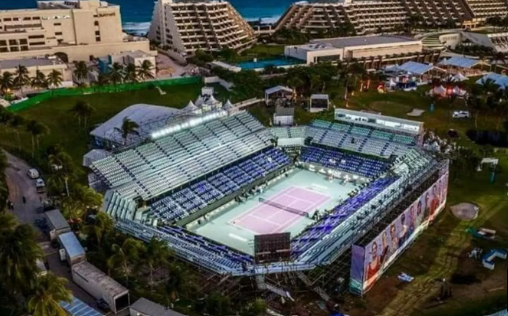
In September 2023, the WTA announced that Cancún would host the championship beginning the following month.
The short preparation period was immediately apparent.
A temporary outdoor stadium was constructed, and players arrived with concerns about the amount of practice time available before competition began.
Weather conditions added to the difficulties.
Strong winds and heavy rain disrupted matches, while players questioned the quality of the playing surface.
World No. 1 Aryna Sabalenka was particularly outspoken.
After defeating Maria Sakkari 6–0, 6–1 in her opening match, Sabalenka criticised the WTA’s handling of the event.
“It’s another level of disrespect from the WTA for the players,” she told reporters, adding that players sometimes felt unsafe moving on the court.
Her criticism extended beyond the surface itself.
In a subsequent social-media statement, Sabalenka explained that the inconsistent bounce and limited opportunity to practise on the match court had left her frustrated.
She believed the preparation was unacceptable for a tournament involving the season’s leading players, particularly given the ranking points and prize money at stake.
But Sabalenka also made a point of separating her criticism of the WTA from the efforts of the local organisers.
She thanked the people who had worked to construct the venue under considerable time pressure and expressed appreciation for the Mexican spectators.
Elena Rybakina was equally unhappy.
Her complaint, she explained, was with the decisions that had created the situation—not with those trying to make the tournament work.
After losing to Jessica Pegula, the Wimbledon champion said the court conditions were poor and that the late preparations had left insufficient time to resolve the problems.
The WTA maintained that the court met its performance standards, while acknowledging the challenges created by the accelerated construction schedule and difficult weather.
But the controversy continued.
In a letter to players reported by Reuters, Simon acknowledged their dissatisfaction and accepted responsibility for the circumstances.
It was an unusual admission from the organisation responsible for staging one of women’s tennis’s most important tournaments.
Simon later offered further context.
Speaking to Sports Business Journal in December 2025, he explained that the WTA had considered an alternative proposal involving the Czech Republic.
However, concerns about whether Russian players could participate, given restrictions associated with the war in Ukraine, influenced the board’s decision.
Simon said the WTA ultimately faced a choice between staging the championship in imperfect circumstances or potentially having no viable event at all.
“It wasn’t perfect, there’s no question about it,” he acknowledged.
He argued that the organisation had prioritised finding a destination where every qualified player could compete.
That explanation does not remove the problems experienced by the players, but it reveals the difficult circumstances behind the decision.
The WTA was attempting to protect the integrity of its championship while operating without a dependable long-term host.
The 2023 Finals did produce a worthy champion, with Iga Świątek defeating Jessica Pegula 6–1, 6–0 in the final.
Yet the tournament was remembered almost as much for the conditions surrounding it as for the tennis.
Riyadh: The financial opportunity and the controversy
In April 2024, the WTA announced another significant hosting agreement.
The Finals would move to Riyadh, Saudi Arabia, for three years.
The initial prize pool was set at US$15.25 million, approximately 70 per cent higher than the US$9 million offered in Cancún the previous year.
The financial attraction was clear.
Saudi Arabia was investing heavily in international sport, and the WTA saw an opportunity to increase player earnings while introducing women’s professional tennis to a new audience.
Arij Mutabagani, president of the Saudi Tennis Federation, argued that hosting the championship could inspire young girls and expand participation in the country.
She presented the tournament as an opportunity for Saudi women to see leading female athletes competing on a major international stage.
But the decision was deeply controversial.
Before the agreement was confirmed, former champions Chris Evert and Martina Navratilova publicly opposed the prospect of Saudi Arabia hosting the Finals.
In a joint opinion article published by The Washington Post, the two legends argued that the WTA had responsibilities extending beyond commercial growth.
They pointed to Saudi Arabia’s human-rights record, particularly its treatment of women and LGBTQ+ people, and questioned whether the agreement was consistent with the principles upon which the women’s tour had been founded.
Their intervention carried particular weight.
Both had helped establish women’s tennis as a major professional sport during an era when female athletes were fighting for recognition, financial equality and greater control over their careers.
Other prominent figures saw the issue differently.
Billie Jean King supported engagement as a potential means of encouraging change, while former world No. 1 Caroline Wozniacki argued that participation could create opportunities for positive influence.
Simon defended the WTA’s approach in his later interview with Sports Business Journal.
He said the agreement followed a lengthy evaluation process that included meetings with Saudi officials and visits by players.
His argument was that sporting organisations should be prepared to support countries making genuine progress, even where significant disagreements remain.
“We’re all not perfect,” Simon said.
He acknowledged that criticism would continue, but maintained that the decision had involved more than the financial offer.
For the WTA, the agreement represented a belief that engagement could help encourage change while also delivering substantial commercial benefits.
The debate reflected a difficult question facing international sport.
Should governing bodies avoid countries whose policies conflict with their stated values, or can engagement provide a platform for gradual change?
The WTA chose engagement.
Riyadh hosted the Finals in 2024 and 2025, with Coco Gauff and Elena Rybakina winning the respective singles titles.
But the three-year agreement would not run its full course.
In July 2026, the WTA announced that the championship would move to Indian Wells for the final year originally allocated to Riyadh.
The WTA said it had requested the move and that the Saudi Tennis Federation had agreed to conclude the arrangement.
Industry reporting identified operational certainty and regional tensions as factors, although the WTA did not publicly give a detailed explanation for the decision.
The full commercial terms of the early termination were not disclosed, making it impossible to establish precisely how much revenue the organisation lost or avoided spending.
What is clear is that another multi-year hosting arrangement had ended earlier than planned.
The financial question nobody can ignore
The changing prize-money figures illustrate the commercial pressures behind the WTA’s decisions.
Shenzhen’s 2019 tournament offered US$14 million.
Riyadh’s opening edition in 2024 offered US$15.25 million, with further increases planned.
The 2026 championship at Indian Wells will offer US$10 million, according to the WTA’s official tournament guide.
Of that amount, US$8 million is allocated to singles and US$2 million to doubles.
An undefeated singles champion can earn US$3.37 million, including participation payments.
Those figures are not directly equivalent to the hosting fees received by the WTA, and they should not be treated as a complete measure of each agreement’s value.
Tournament operating costs, sponsorship revenue, broadcasting arrangements and other commercial commitments also matter.
Nevertheless, the numbers help explain why wealthy host cities have been attractive.
The WTA must provide competitive prize money, develop its international audience and generate sufficient revenue to support the wider tour.
The Finals is one of its most valuable commercial properties.
A host willing to invest heavily can provide substantial short-term benefits.
But there is another consideration.
When a tournament moves repeatedly, organisers must continually establish relationships with local businesses, sponsors, spectators and public authorities.
A successful event in one city does not automatically create a loyal audience in the next.
The WTA’s challenge has been finding a model that provides both financial strength and a recognisable long-term identity.
Charlotte: A different approach?
In September 2026, the WTA announced that Charlotte, North Carolina, would host the Finals from 2027 through 2029.
At first glance, it looked like another three-year agreement.
But there was a significant difference.
The WTA also announced that it would relocate its global headquarters from St. Petersburg, Florida, to Charlotte.
The Finals will be staged at Spectrum Center, home of the NBA’s Charlotte Hornets, with additional activities planned at the Charlotte Convention Center.
The agreement involves the Charlotte Sports Foundation and support from state and local authorities, alongside private-sector investment.
There is also the possibility of establishing a WTA 500 tournament in Charlotte after 2029, subject to the development of a suitable tennis facility and further support.
This is a broader commitment than simply selecting a venue for the season-ending championship.
Valerie Camillo, the WTA’s chair, made that clear when the agreement was announced.
“In Charlotte, we found more than a host city,” she said.
Camillo explained that the WTA wanted to create a championship experience reflecting the growth of women’s sport, with stronger connections to fans, commercial partners and the wider community.
The organisation’s ambition, she said, was to build an event worthy of the achievements of its leading players while establishing a more permanent home for the championship and the WTA itself.
There is also a significant change in how the tournament will be managed.
In comments reported by Reuters, Camillo explained that the WTA intends to operate the Finals directly rather than relying on the outside-promoter arrangements used previously.
“The WTA will be taking greater ownership and control of the event,” she said.
That change could give the association more influence over the tournament’s commercial direction, presentation and long-term development.
Camillo also raised the possibility of a different financial relationship with players.
Rather than focusing exclusively on equal prize money, she suggested that the WTA could explore a model in which players share in the tournament’s financial success.
It is an intriguing proposal, although no final arrangement has been announced.
The Charlotte partnership would give the WTA an opportunity to establish stronger relationships with local businesses and supporters while developing a consistent championship experience.
It also offers the prospect of year-round organisational involvement in the city.
None of that guarantees success.
The agreement currently covers three editions, and the WTA has previously entered multi-year partnerships with similarly ambitious expectations.
But relocating its headquarters and taking greater operational control suggest that the organisation sees Charlotte as more than another temporary destination.
Can the WTA Finals finally establish a lasting identity?
The WTA Finals has never lacked great champions.
From Navratilova and Evert to Serena Williams, Świątek, Gauff and Rybakina, its history includes many of the finest players the sport has produced.
Nor has the tournament lacked commercial interest.
Cities and investors have repeatedly demonstrated a willingness to spend substantial sums to host the championship.
What has proved more difficult is finding a balance between international expansion, financial security, player satisfaction and continuity.
Shenzhen offered extraordinary money and a ten-year commitment, but the pandemic and its aftermath brought the arrangement to an early end.
Cancún showed what could happen when uncertainty left organisers with too little preparation time.
Riyadh demonstrated both the financial opportunities and wider controversies associated with taking women’s tennis into new markets.
Charlotte represents the WTA’s latest attempt to learn from that history.
When the world’s leading players arrive at Indian Wells this weekend, they will compete for one of the sport’s most prestigious titles.
A year later, they will travel to another city.
The WTA hopes that this time, the move will mark the beginning of something more permanent.
After more than two decades of searching, the real achievement may not be finding the next host willing to stage the Finals.
It may be finding a city where the championship can build a lasting identity.
Continue Reading
- WTA Tour Explained
- WTA 1000 Explained
- Tennis Prize Money Explained
- Live Tennis Rankings Explained
- WTA Tennis Finals Explained
Read more of our exclusive feature articles here.
Read more of our player focus articles here.
Follow The Tennis Site on X: @thetennissite
Follow Todd Scoullar on X: @toddscoullar

Comments are closed, but trackbacks and pingbacks are open.