
By Joseph G, Founder, NOUS TECHNOLOGY LIMITED
A clean contact is only half a successful stroke. The other half is the position the player creates for what happens next.

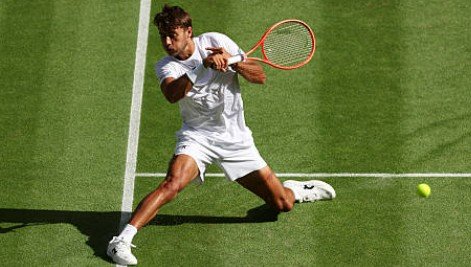
Featured image. SpatialForm concept visual showing how athlete movement can be preserved as a continuous, reviewable sequence. Original visual provided by the author.
A player drives a forehand deep into the corner. The contact looks clean, the ball has pace, and the follow-through finishes high. On the next shot, however, the player is still outside the court, leaning away from the baseline and taking a late crossover step. The forehand looked successful. The movement sequence was not.
This is where many stroke analyses stop too early. Players and coaches often examine preparation, racket path, contact point and follow-through, then end the review as soon as the ball leaves the strings. But tennis does not stop at contact. The player still has to decelerate, regain balance, recover court position, read the opponent and organize the next action.
| A stroke does not end when the ball leaves the strings. It ends when the player is ready to move again. |
Recovery is therefore not an optional extra added after the “real” technique. It is part of the stroke itself. When recovery is ignored, a technically attractive shot can hide poor spacing, unstable balance, excessive momentum or a finish that makes the next ball harder than it needs to be.
Contact Is a Moment, Not the End of the Action
The ball is on the strings for only a fraction of a second, but the movement that creates contact begins well before that moment and continues long after it. A useful analysis should connect at least four phases: arrival, contact, exit and re-entry.
- Arrival: how the player recognizes the ball, moves into position and creates hitting space.
- Contact: the relationship between body position, racket path, balance and the incoming ball.
- Exit: how the player decelerates and manages the momentum created by the stroke.
- Re-entry: how quickly the player restores a useful court position and becomes available for the next action.
When those phases are separated, recovery can look like an afterthought. When they are reviewed as one sequence, the quality of the finish becomes evidence about the quality of the entire stroke. A player who repeatedly finishes off balance may not have a “recovery problem” in isolation. The cause may be late preparation, poor spacing or a contact point that forced the body to continue moving in the wrong direction.
What Recovery Reveals That Contact Alone Cannot
Contact tells us whether the player reached the ball in a usable position. Recovery tells us how expensive that contact was. Two players can produce the same ball speed and depth, yet one remains organized while the other spends the next second repairing the body position created by the shot.
That difference matters because tennis rewards repeatable availability. A shot is not only valuable because of what it does to the ball; it is valuable because of the position it leaves the athlete in when the opponent responds.
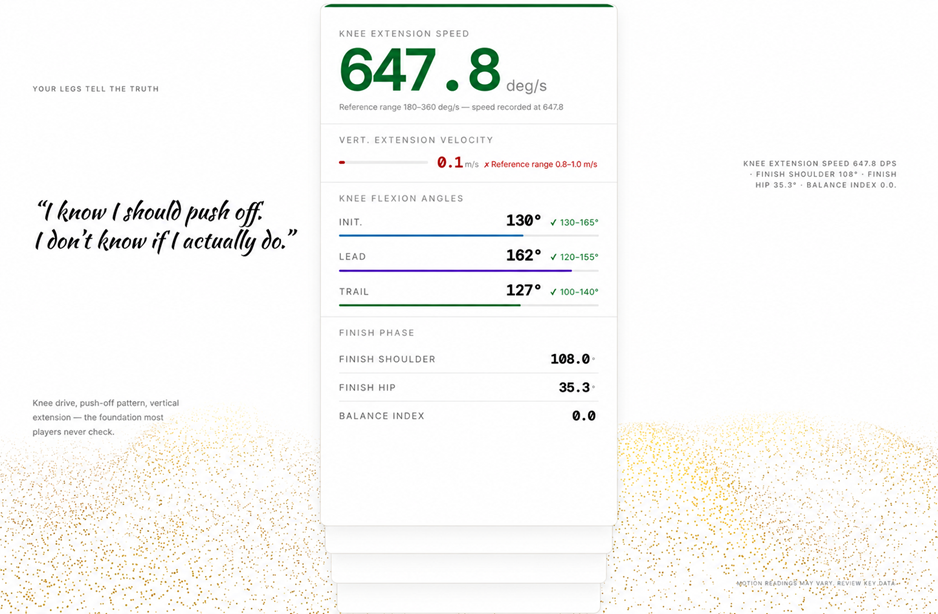
Figure 1. Concept view connecting lower-body contribution, finish position and balance to the exit phase of the stroke. All displayed values are illustrative.
Five Recovery Checks for Any Tennis Stroke
1. Balance immediately after contact
Freeze the video one or two frames after impact. Is the player still organized over a stable base, or is the upper body falling, twisting or drifting? The goal is not to demand a perfectly upright finish. The goal is to see whether the athlete can control the momentum produced by the shot.
2. Direction of the first recovery step
The first step after contact is often more revealing than the final pose. Does it move the player toward a useful recovery path, or is it merely a rescue step used to prevent a fall? A fast first step in the wrong direction is not efficient recovery.
3. Recovery delay
Measure the gap between contact and the first purposeful recovery movement. Some players admire the shot, hold the finish or remain locked in the hitting stance. Even a small delay can matter when the opponent redirects the next ball early.
4. Court re-entry
Recovery is not simply “return to the middle.” The correct destination depends on shot direction, opponent position and tactical intent. The important question is whether the player moves toward a position that protects the likely next ball.
5. Next-ball readiness
The final check is whether the athlete is physically available when the opponent strikes. Are the feet active? Is the body balanced? Has the player recovered enough visual and postural control to split step and respond? This is the point at which one stroke truly connects to the next.
Two Forehands, Similar Results, Different Futures
Consider two forehands that both land deep through the middle of the court. If the analysis ends with ball outcome, the shots appear equally successful. The recovery sequence tells a different story.
| OBSERVATION | PLAYER A | PLAYER B |
| At contact | Balanced, slightly open stance, center of mass controlled. | Contact is clean, but momentum continues sharply toward the sideline. |
| First step | Immediate outside-leg push and efficient re-entry. | Late crossover step used to recover balance rather than court position. |
| Next ball | Ready to split step before the opponent contacts the ball. | Still moving back toward the court when the opponent begins the next shot. |
The ball result is similar, but the movement cost is not. Player A finishes the stroke in a form that supports the next action. Player B produces the shot by borrowing time and balance from the next exchange. If the coach only praises depth and contact, the more important difference remains invisible.
Recovery Problems Often Begin Before Contact
A slow recovery is not always caused by laziness or poor fitness. Often it is the final symptom of an earlier technical or perceptual problem. Late recognition can force a rushed approach. Poor spacing can make the player reach. Excessive forward momentum can carry the athlete through the stroke and beyond the ideal recovery line.
This is why the recovery phase should be reviewed backward as well as forward. If the player cannot re-enter the court efficiently, ask what created that finish. Was the body too close to the ball? Did the player contact while moving away from the court? Did the first step toward the ball arrive too late, leaving no time for an organized exit?
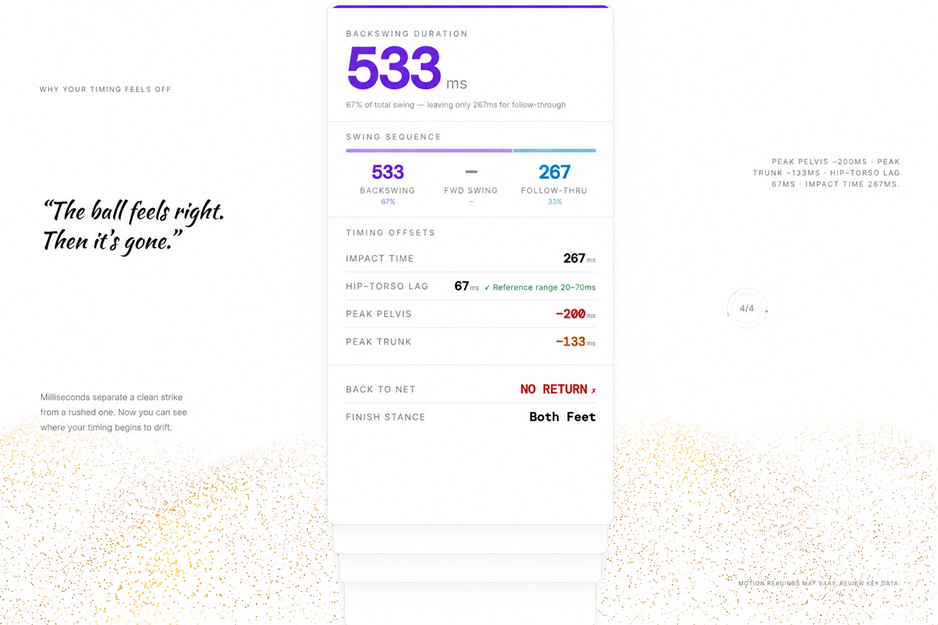
Figure 2. Concept view showing how timing across the swing and finish phase can be kept connected. All values and reference ranges are illustrative.
A Practical Three-Pass Video Review
Ordinary phone video is enough to begin reviewing recovery, provided the camera angle captures both the stroke and the first movement after contact. A simple three-pass routine keeps the analysis focused.
| PASS | VIEW | QUESTION |
| 1 | Full speed | Did the player appear available for the next ball, or did recovery begin late? |
| 2 | Contact to first step | What happened to balance and momentum immediately after impact? |
| 3 | Next opponent contact | Was the player in a position to split step and respond when the next action began? |
This routine works because it avoids turning the review into a hunt for every visible imperfection. The coach is not trying to produce a complete biomechanical diagnosis from one clip. The goal is to identify whether the stroke supported the next action and, if not, where the sequence first began to break down.
From Replay to Performance Form
The broader opportunity is to stop treating recovery as a footnote and instead preserve the stroke as one continuous movement object. Preparation, contact, deceleration, recovery and readiness belong to the same performance sequence.
One way to frame this is through Performance Form: a structured representation of athlete movement that keeps phases, timing and body relationships connected rather than reducing the stroke to one contact frame or a collection of isolated numbers.
For a tennis player, that means the review can continue beyond “Did I hit the ball well?” It can ask whether the movement created a stable finish, an efficient first step and a position from which the next shot remained possible.
What Video Can and Cannot Tell You
Video can show whether balance was lost, when recovery began and where the player moved after contact. It cannot, by itself, prove every cause. A delayed first step may reflect poor anticipation, fatigue, tactical choice or a movement limitation. The clip provides evidence; the coach still supplies context and judgment.
The same caution applies to angle, speed and timing estimates produced by computer vision. These signals can organize observation and make comparisons easier, but they should not be treated as clinical diagnosis or laboratory-grade measurement unless they have been validated for that specific use.
Conclusion: Judge the Shot by the Position It Creates
A tennis stroke should not be judged only by the ball that has already been hit. It should also be judged by the position it creates for what happens next.
Recovery reveals whether the athlete controlled the momentum of the shot, whether the first step was useful, whether court position was restored and whether the player was ready when the opponent began the next action. Those questions turn recovery from an afterthought into a core part of technical analysis.
The next time a forehand looks clean, let the video continue. The most important information may appear after contact.
| Author Bio Joseph G is the founder of NOUS TECHNOLOGY LIMITED and the developer of SpatialForm. He writes about tennis movement analysis, sports video and practical athlete-feedback systems. |
Read more of our instructional articles here.
Read more of our player focus articles here.
Follow Spatial Form on X: @Spatial_Form
Follow Spatial Form on Instagram: @spatial_form
Follow Spatial Form on Facebook: @spatialform
Follow The Tennis Site on X: @thetennissite

Comments are closed, but trackbacks and pingbacks are open.