
Quick Answer
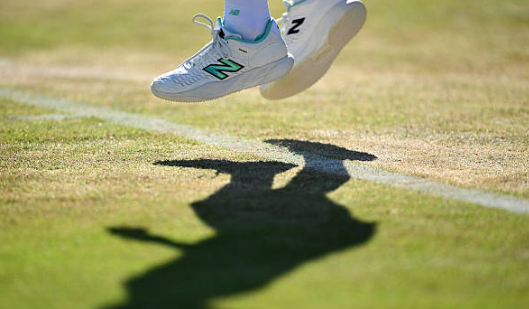
A foot fault occurs when a player breaks the serving rules with their feet before striking the ball.
The most common foot faults include:
- Touching the baseline before contact.
- Stepping inside the court before striking the serve.
- Crossing the centre mark.
- Standing outside the imaginary extension of the singles sideline.
A foot fault counts exactly the same as any other service fault. If it happens on a second serve, it results in a double fault.
What Is a Foot Fault?
During the serve, players are only allowed to move in certain ways before hitting the ball.
Until the ball is struck, the server must not:
- Touch the baseline.
- Step inside the court.
- Cross the centre mark.
- Stand outside the permitted serving area.
If any of these occur before contact, the serve is immediately ruled a foot fault.
The Official Rule
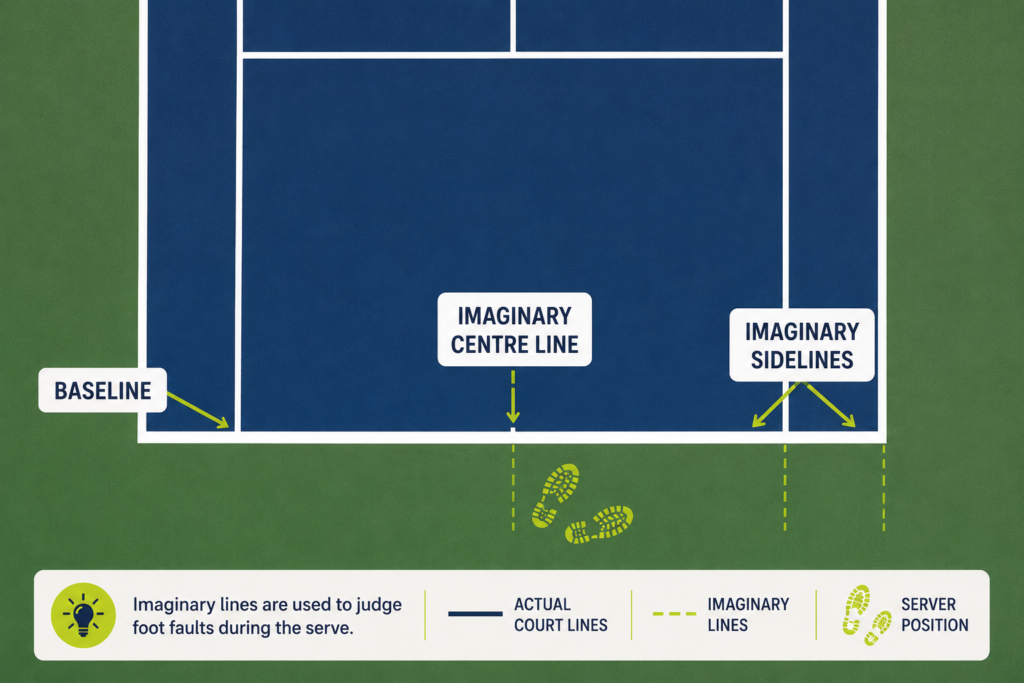
Before striking the ball, the server must stand:
- Behind the baseline.
- Between the centre mark and the singles sideline.
- Without touching any of these lines with either foot.
The server may move during the service motion, but both feet must remain within the legal serving area until the ball has been hit.
The Four Most Common Foot Faults
1. Touching the Baseline
This is the most common foot fault.
Many players allow their front foot to creep forward during the serve.
Even lightly touching the baseline before making contact with the ball is a fault.
2. Stepping Into the Court
Some players accidentally step over the baseline before hitting the serve.
This is also a foot fault.
Once the ball has been struck, players are free to move into the court.
3. Crossing the Centre Mark
The centre mark divides the serving positions.
The server cannot step across this line before striking the ball.
4. Standing Too Wide
Players must remain between the centre mark and the imaginary extension of the singles sideline.
Standing outside this area is another type of foot fault.
Does a Foot Fault Count as a Fault?
Yes.
A foot fault is treated exactly like any other service fault.
First Serve
Foot fault → Second serve.
Second Serve
Foot fault → Double fault.
The score is unaffected unless the second serve is also a fault.
Why Are Foot Faults Called?
The serving rules exist to ensure fairness.
Without them, players could gain an unfair advantage by moving closer to the net before serving.
Requiring players to stay behind the baseline creates a consistent serving position for everyone.
Are Foot Faults Common?
At recreational level, foot faults often go unnoticed.
In professional tennis, however, chair umpires and line judges closely monitor players’ feet during the serve.
Occasionally, even the world’s best players are called for foot faults.
How Can You Avoid Foot Faults?
Most players can eliminate foot faults with a few simple habits.
Start Slightly Behind the Baseline
Giving yourself a few extra centimetres reduces the risk of accidentally touching the line.
Practise Your Serve
Repetition helps develop consistent footwork.
Recording yourself serving can also reveal small movements you may not notice.
Focus on Balance
Good balance makes it easier to stay behind the baseline while generating power.
Common Mistakes
Many beginners believe:
- Touching the line is allowed.
- Only the front foot matters.
- You can step into the court during the toss.
All of these are incorrect.
Either foot can commit a foot fault if it breaks the serving rules before the ball is struck.
Common Myths
“Only your front foot can foot fault.”
False.
Either foot can commit a foot fault.
“A foot fault isn’t a real fault.”
False.
It counts exactly the same as serving the ball long or into the net.
“You can touch the baseline after tossing the ball.”
False.
The baseline cannot be touched until after the ball has been struck.
Frequently Asked Questions
What is a foot fault in tennis?
A foot fault occurs when a server breaks the serving rules with their feet before striking the ball.
Does a foot fault count as a fault?
Yes.
It is treated exactly like any other service fault.
Can you step on the baseline while serving?
No.
Touching the baseline before striking the ball is a foot fault.
Can both feet commit a foot fault?
Yes.
Either foot can cause a foot fault if it breaks the serving rules.
Do professionals get called for foot faults?
Yes.
Although they’re relatively uncommon, foot faults are occasionally called at every level of professional tennis.
Final Thoughts
Foot faults are one of the easiest tennis rules to understand, yet they’re also among the most commonly misunderstood by new players. While they rarely occur in casual matches, they are an important part of the official Rules of Tennis and ensure every player begins the point from the same legal position.
Developing consistent serving footwork not only helps you avoid unnecessary faults but also builds a more reliable and repeatable service motion.
Continue Reading
- Tennis Serve Rules Explained
- What Is a Let in Tennis?
- Tennis Court Dimensions Explained
- Official Tennis Net Height
- Tennis Scoring Explained
- The Ultimate Tennis Glossary: 60 Tennis Terms Every Fan Should Know
Read more of our instructional articles here.
Read more of our player focus articles here.
Follow The Tennis Site on X: @thetennissite
Follow Todd Scoullar on X: @toddscoullar

Comments are closed, but trackbacks and pingbacks are open.