
Quick Answer
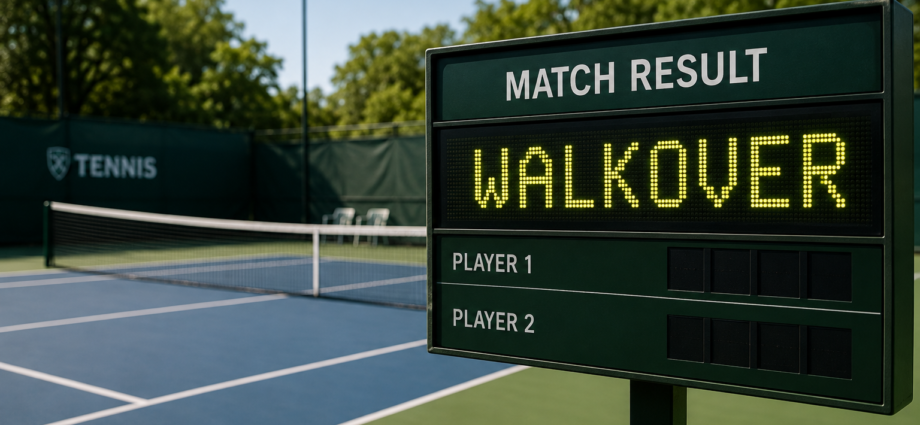
A walkover occurs when a player is unable to start a scheduled match.
Instead of playing, their opponent automatically advances to the next round.
Walkovers most commonly happen because of:
- Injury
- Illness
- Personal reasons
- Medical withdrawal
Unlike a retirement, no point of the match has begun.
What Is a Walkover?
A walkover happens before the first point is played.
If a player withdraws before the match starts, the match is never officially played.
The opponent advances automatically without striking a ball.
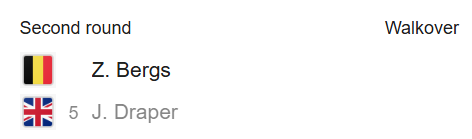
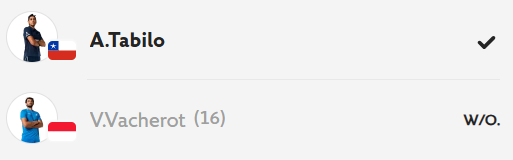
In tournament draws, the result is usually recorded as:
W/O (Walkover)
Why Do Walkovers Happen?
Most walkovers occur because a player cannot compete.
Common reasons include:
Injury
Players often withdraw after suffering an injury in the previous round.
Illness
Fever, viruses or food poisoning can prevent a player from taking the court.
Medical Advice
Tournament doctors sometimes advise players not to compete.
Personal Circumstances
Occasionally players withdraw because of family emergencies or other personal situations.
Does a Walkover Count as a Win?
Yes and no.
The advancing player moves to the next round exactly as if they had won.
However:
- No match statistics are recorded.
- No games or sets are played.
- The winner does not officially record a match victory in the statistical sense used for head-to-head records.
The tournament simply records that the player advanced via walkover.
Does the Winner Receive Ranking Points?
Yes.
The player receiving the walkover advances in the tournament and receives the ranking points associated with reaching the next round.
Prize money and ranking points follow the tournament’s official regulations.
Walkover vs Retirement
These terms are often confused.
The key difference is whether the match has started.
| Walkover | Retirement |
|---|---|
| Match never begins | Match has already started |
| No points played | At least one point played |
| Opponent advances | Opponent advances |
| Recorded as W/O | Recorded as Retired |
If a player injures themselves during the warm-up and cannot begin the match, it’s usually a walkover.
If they retire after the first point, it’s a retirement.
Walkover vs Default
A default is different again.
A default occurs when a player is disqualified for breaking the rules.
Examples include:
- Serious misconduct
- Dangerous behaviour
- Repeated code violations
Unlike a walkover, defaults are disciplinary decisions rather than medical withdrawals.
Are Walkovers Common?
Yes.
Professional players compete almost every week, often carrying minor injuries throughout the season.
When continuing would risk making an injury worse, withdrawing before the match is often the sensible decision.
Walkovers occur regularly on both the ATP and WTA Tours.
Common Myths
“A walkover is the same as retiring.”
False.
A retirement occurs after play has started.
A walkover happens before the match begins.
“The winning player gets an easy match win.”
Not exactly.
The player advances in the draw but no official match statistics are recorded because no match was played.
“Walkovers only happen at amateur tournaments.”
False.
Walkovers occur regularly in professional tennis, particularly during busy parts of the season.
Frequently Asked Questions
What is a walkover in tennis?
A walkover occurs when one player cannot start a scheduled match, allowing their opponent to advance automatically.
Does a walkover count as a match played?
No.
Because no points are played, the match never officially begins.
Do players receive ranking points after a walkover?
The advancing player continues through the tournament and receives the ranking points associated with progressing, subject to the tournament’s regulations.
Is a walkover the same as a retirement?
No.
A retirement happens after the match has started, while a walkover happens beforehand.
Why do professional players take walkovers?
Most walkovers are caused by injury or illness, although personal reasons can also lead to a withdrawal.
Final Thoughts
Walkovers are an unfortunate but unavoidable part of professional tennis. They usually occur when a player is unable to compete before a match begins, allowing their opponent to advance without a ball being struck.
Understanding the difference between a walkover, a retirement and a default makes it much easier to follow tournament draws and match results, particularly during Grand Slam events where player withdrawals often attract significant attention.
Continue Reading
- What Is a Retirement in Tennis?
- What Is a Default in Tennis?
- Tennis Serve Rules Explained
- Tennis Scoring Explained
- The Ultimate Tennis Glossary: 60 Tennis Terms Every Fan Should Know
- Tennis Court Dimensions Explained
Read more of our instructional articles here.
Read more of our player focus articles here.
Follow The Tennis Site on X: @thetennissite
Follow Todd Scoullar on X: @toddscoullar

Comments are closed, but trackbacks and pingbacks are open.