
Quick Answer
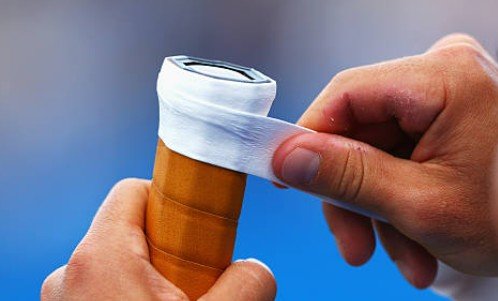
Although they look similar, overgrips and replacement grips serve very different purposes.
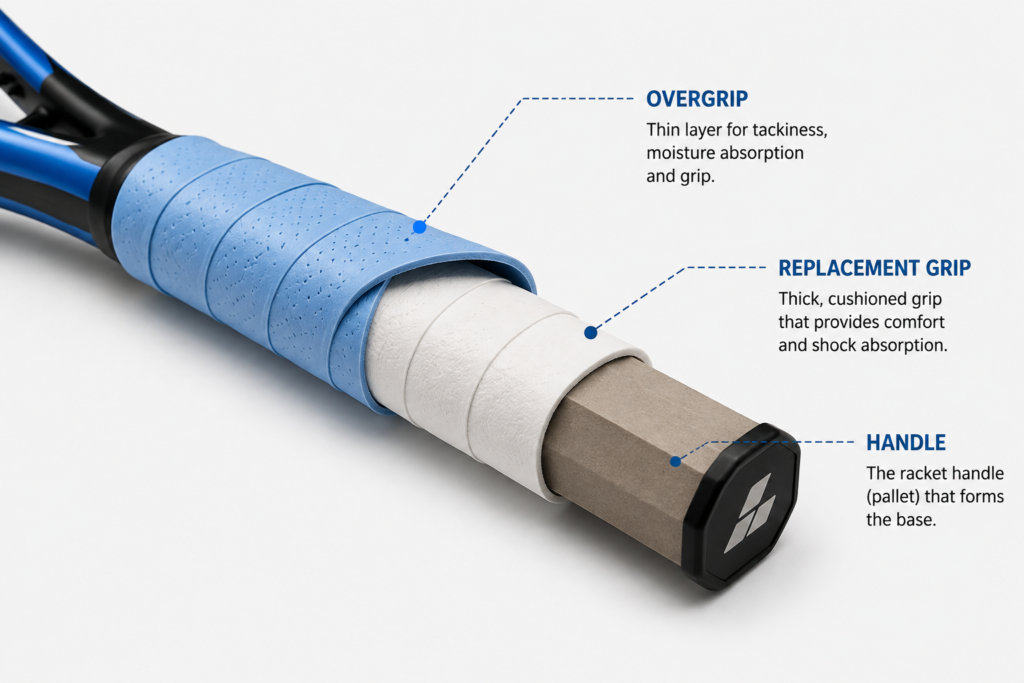
- Replacement grips are the thick, cushioned grips fitted directly to the racquet handle.
- Overgrips are thin wraps applied over the replacement grip to improve comfort, tackiness and moisture absorption.
Most players replace their replacement grip only occasionally, but change their overgrip regularly.
Why Do Tennis Racquets Have Two Grips?
Many new players are surprised to discover that most racquets actually have two separate layers on the handle.
The first layer is the replacement grip, which comes installed by the manufacturer.
Many players then add an overgrip on top of that.
Each layer has a different job.
What Is a Replacement Grip?
The replacement grip is the main grip of your racquet.
It wraps directly around the handle and provides:
- Cushioning
- Comfort
- Shock absorption
- Grip shape
Every new racquet comes with one already installed.
Replacement grips are much thicker than overgrips and are designed to last for many months of regular play.
Advantages of a Replacement Grip
✔ Excellent cushioning
✔ Comfortable feel
✔ Reduces vibration
✔ Long lifespan
Disadvantages
✘ More expensive than overgrips
✘ Takes longer to install
✘ Doesn’t stay tacky forever
What Is an Overgrip?
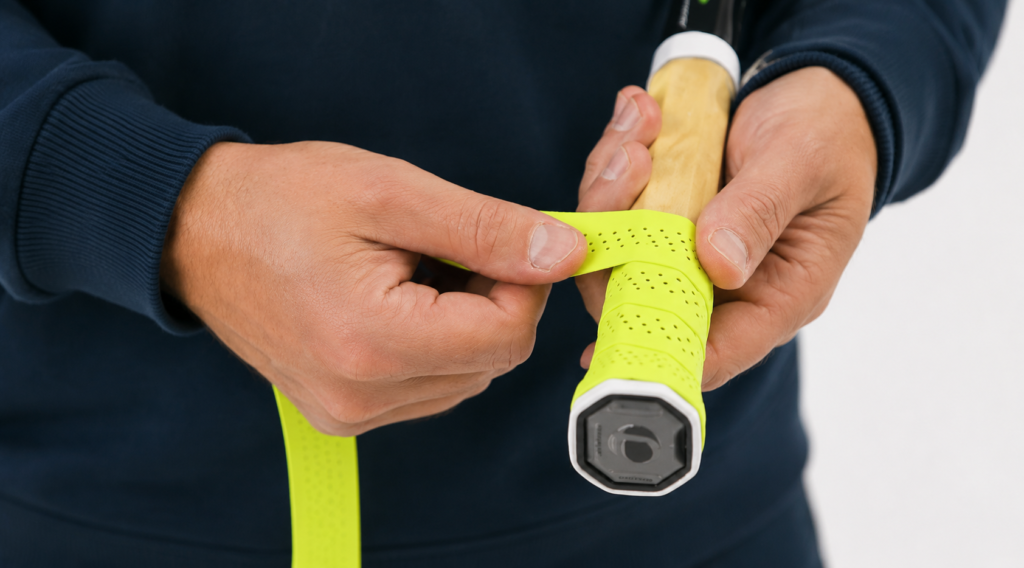
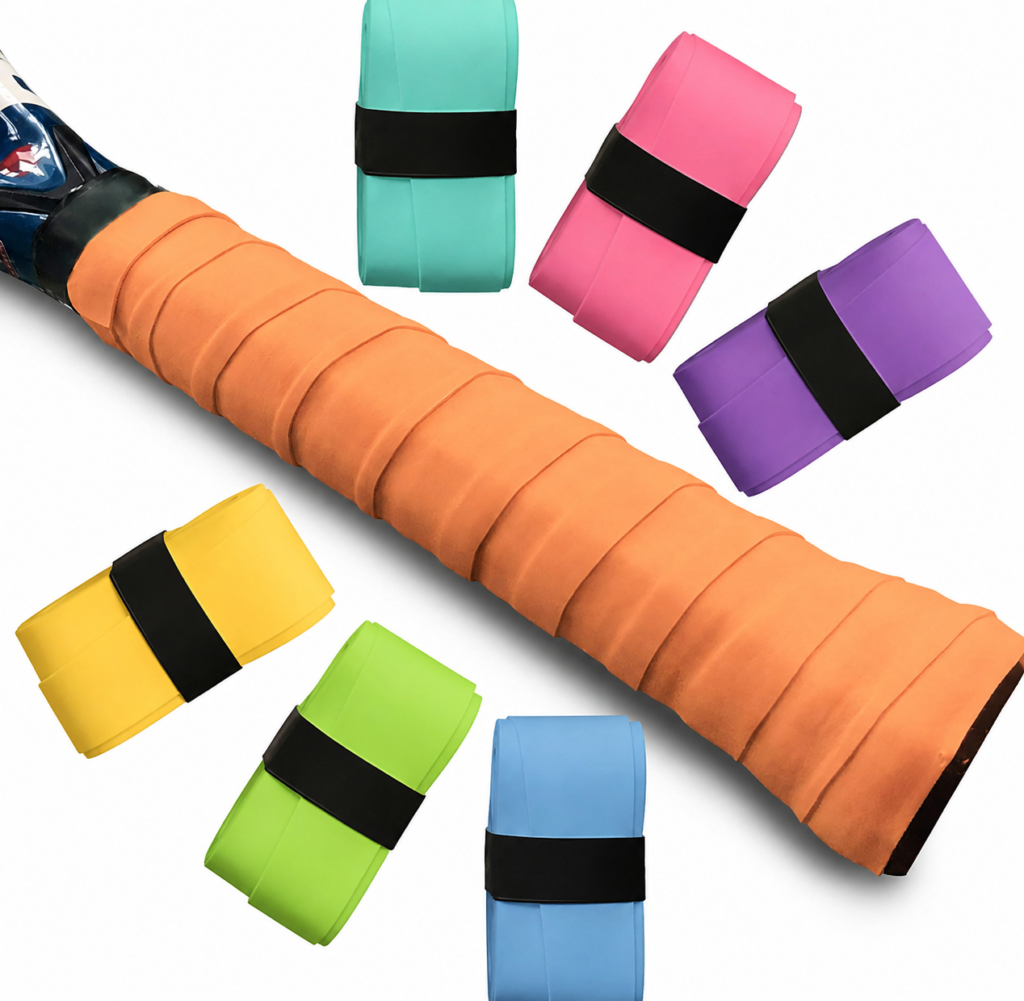
An overgrip is a thin strip of material wrapped over the replacement grip.
It allows players to refresh the feel of their racquet without replacing the main grip.
Most overgrips are only around 0.4–0.7 mm thick, making them much thinner than replacement grips.
Because they’re inexpensive, many players replace them frequently.
Advantages of an Overgrip
✔ Improves grip
✔ Absorbs sweat
✔ Easy to replace
✔ Inexpensive
✔ Protects the replacement grip underneath
Disadvantages
✘ Wears out quickly
✘ Needs regular replacement
✘ Slightly increases grip size
The Main Differences
| Feature | Overgrip | Replacement Grip |
|---|---|---|
| Thickness | Thin | Thick |
| Installed Over | Replacement grip | Bare handle |
| Cushioning | Low | High |
| Shock Absorption | Low | High |
| Cost | Lower | Higher |
| Replacement Frequency | Often | Occasionally |
Which One Should You Replace?
For most players, the answer is simple.
Replace your overgrip whenever it becomes:
- Slippery
- Dirty
- Torn
- Worn smooth
Only replace your replacement grip when it:
- Loses its cushioning
- Starts breaking apart
- Feels hard
- No longer provides adequate comfort
Does an Overgrip Change Grip Size?
Yes—but only slightly.
Adding one overgrip usually increases the grip size by approximately half a grip size, depending on the brand and thickness.
For players between grip sizes, this can actually be an advantage.
If you’re unsure about grip sizing, read Tennis Grip Size Guide
Which Grip Is Better for Sweaty Hands?
Overgrips are available in different styles.
Some prioritise:
- Tackiness
- Sweat absorption
- Comfort
- Durability
Players with sweaty hands often choose dry overgrips that absorb moisture effectively.
Those who prefer maximum stickiness usually select tacky overgrips.
Can You Play Without an Overgrip?
Absolutely.
Many recreational players simply use the factory replacement grip.
However, adding an overgrip offers several benefits:
- Protects the original grip
- Provides a fresh feel
- Improves grip in hot conditions
- Costs very little
For many players, it’s one of the cheapest upgrades they can make.
Common Myths
“Overgrips replace the original grip.”
False.
Overgrips are designed to be wrapped over the replacement grip, not instead of it.
“Professional players don’t use overgrips.”
Most professional players do use overgrips, although the exact type and thickness vary from player to player.
“A thicker grip always gives more control.”
Not necessarily.
Grip size and comfort are personal preferences, and using the correct grip size is generally more important than simply making it thicker.
Frequently Asked Questions
Can you put an overgrip directly onto the racquet handle?
It’s possible, but not recommended. Overgrips are designed to be used over a replacement grip.
How often should you change an overgrip?
Many players replace an overgrip every few sessions, while competitive players may install a new one before every match.
How often should you replace a replacement grip?
Depending on how often you play, a replacement grip can last several months or even longer before needing replacement.
Does an overgrip make the grip bigger?
Yes.
Most overgrips increase the grip size slightly.
Is an overgrip worth it?
For most players, yes.
It’s an inexpensive way to improve comfort, grip and moisture control while protecting the replacement grip underneath.
Final Thoughts
Although they’re often confused, overgrips and replacement grips have very different roles.
The replacement grip forms the foundation of your racquet handle, providing cushioning and comfort, while the overgrip acts as a replaceable outer layer that improves grip and absorbs sweat.
Most players will replace many overgrips before ever needing to install a new replacement grip. Understanding the difference helps you maintain your racquet properly and ensures it always feels comfortable in your hand.
Continue Reading
- Tennis Grip Size Guide
- Tennis Overgrips Explained
- Replacement Grips Explained
- How to Choose a Tennis Racquet
- The Complete Guide to Tennis Equipment
Read more of our instructional articles here.
Read more of our news articles here.
Follow The Tennis Site on X: @thetennissite
Follow Todd Scoullar on X: @toddscoullar

Comments are closed, but trackbacks and pingbacks are open.