
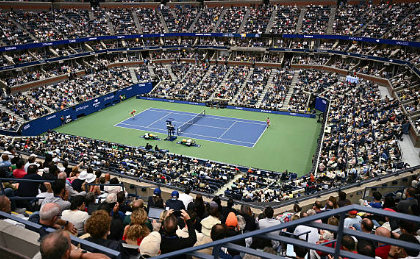
Aryna Sabalenka arrives at the 2026 US Open attempting to achieve something no woman has managed for more than a decade: win three consecutive singles titles at Flushing Meadows.
The last player to complete the hat-trick was Serena Williams, who ruled New York from 2012 to 2014. Sabalenka has earned the opportunity to follow her through two years of dominant hard-court tennis, but her latest title defence may be the most difficult of the three.
Coco Gauff enters the tournament on a six-match winning streak after lifting the Cincinnati trophy. Iga Swiatek rediscovered her hard-court form by winning Toronto, while Elena Rybakina began the year by claiming the Australian Open. Mirra Andreeva and Linda Noskova won Roland Garros and Wimbledon respectively, ensuring that all four of this season’s major champions are positioned in different parts of a remarkably balanced draw.
The projected quarterfinals are Sabalenka against Noskova, Jessica Pegula against Karolina Muchova, Andreeva against Gauff, and Swiatek against Rybakina.
The first week may not be overflowing with blockbuster matches, but the second could be exceptional.
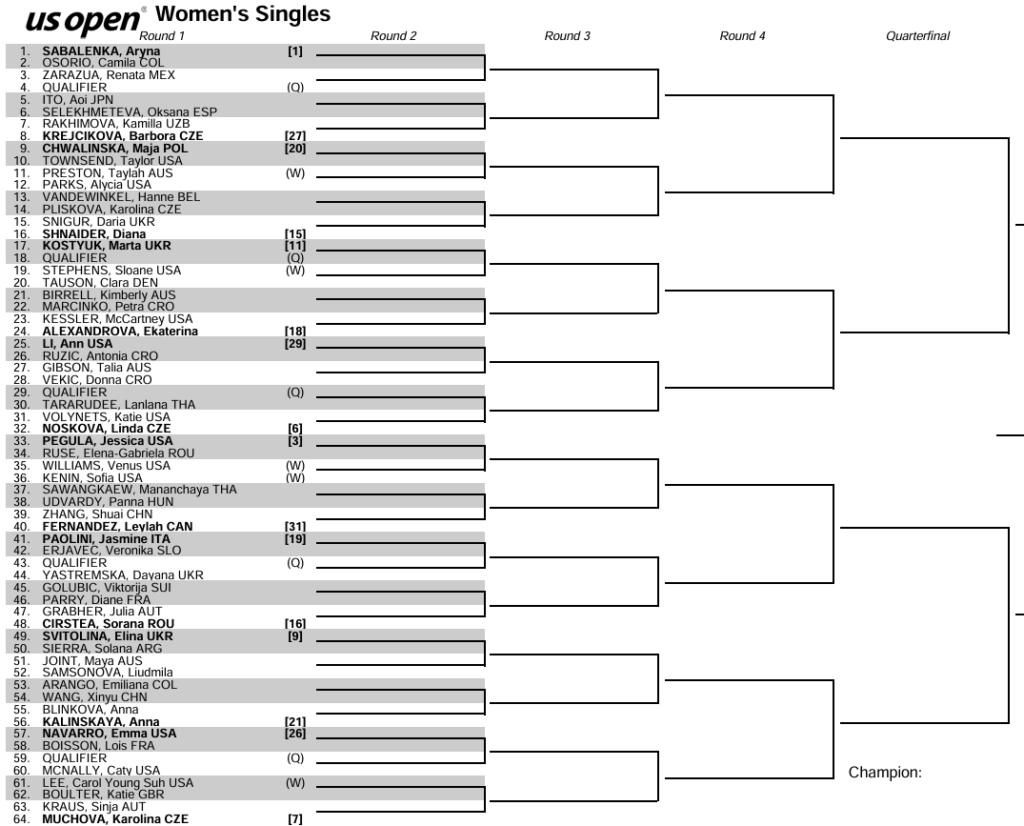
Venus Williams and Sofia Kenin Provide the Marquee First Round
Venus Williams against Sofia Kenin is the one of the most (or least) interesting match of the opening round, bringing together two generations of American Grand Slam champions who are both nowhere near that kind of form.
Williams, now 46, has received a wildcard for what may be another final singles appearance at Flushing Meadows. Kenin, the 2020 Australian Open champion, is also competing on a wildcard after an injury-disrupted period.
Surprisingly, they have never played each other.
Williams’ presence guarantees a significant crowd – for at least 90minutes – and a big atmosphere, although Kenin should enter as the favourite. Venus has lost 13 consecutive singles matches and has not recorded a victory since 2023. Her first-strike tennis can still create problems, but her movement and ability to recover between demanding rallies are understandably no longer what they once were.
Kenin has endured difficulties of her own, but she remains capable of taking the ball early and changing direction sharply from the baseline. If she can manage the occasion and avoid being drawn into the emotion surrounding her opponent, she should advance to a likely second-round meeting with third seed Jessica Pegula.
Badosa and Kasatkina Meet With Gauff Waiting
Paula Badosa against Daria Kasatkina may be the most evenly balanced match of the first round.
Both have been ranked inside the top 10. Both are now unseeded. Both possess enough experience and court craft to trouble the leading players, although neither arrives with the form that once made her a regular contender at major tournaments.
The stylistic contrast should make the match absorbing. Badosa will look to control the court with her serve and forehand, while Kasatkina will use spin, changes of height and sharp angles to prevent her opponent from settling into a clean hitting rhythm.
The winner is likely to face Gauff.
That may represent a substantial early test for the fourth seed. Gauff begins against Zeynep Sonmez, but her second match against a former world No. 2 in Badosa or one of the tour’s most intelligent disruptors in Kasatkina may not be so straight-forward.
Neither should prevent an in-form Gauff from advancing however, but both are capable of exposing any return of the serving problems that have followed the American throughout the season.
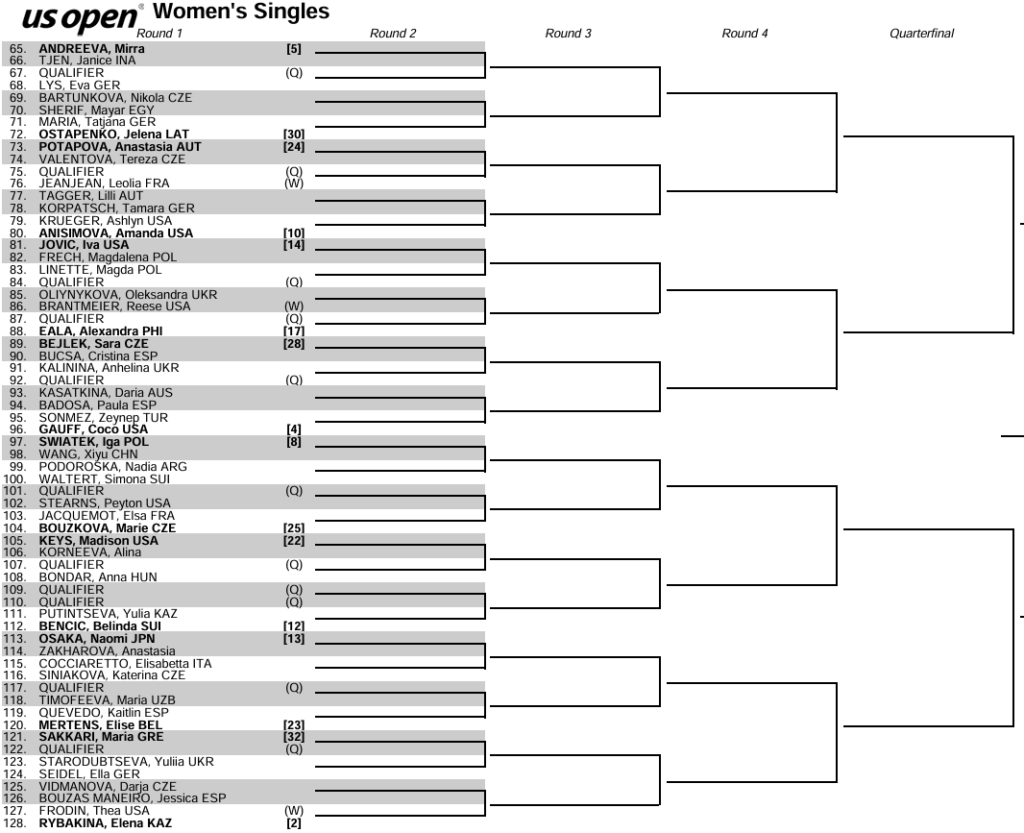
Ostapenko and Maria Promise Complete Contrast
Jelena Ostapenko against Tatjana Maria offers one of the most dramatic stylistic contrasts in the draw.
Ostapenko will attack virtually every ball she can reach. Maria relies on slice, changes of pace and awkward trajectories. At one end of the court, we have a player who will attempt to accelerate the contest; the other will try to make conventional timing almost impossible.
The match could be excellent or chaotic—possibly both.
Ostapenko’s power makes her the favourite, but her margin for error is small. Maria has built a career around encouraging opponents to overhit, particularly when they become frustrated by the lack of pace coming towards them.
The winner will probably meet Anastasia Potapova in the second round, with Andreeva projected to wait in the third.
Stephens Faces a Difficult Start Against Tauson
Sloane Stephens, the 2017 champion, has been handed a demanding opening match against Clara Tauson.
Stephens has produced some of the finest tennis of her career in New York, but her recent results have made it difficult to know what to expect from one tournament to the next. Tauson possesses the more immediate power and can dominate when her serve and first groundstroke work together.
The draw offers no relief to the winner. Marta Kostyuk is the likely second-round opponent, followed by Ekaterina Alexandrova.
Stephens has the defensive skills to frustrate Tauson, but the Dane should now be better equipped to sustain her aggression across three sets.
The same section includes Diana Shnaider against Daria Snigur and Roland Garros finalist Maja Chwalinska against Taylor Townsend. Townsend has reached the US Open fourth round twice, including last year, and her willingness to attack the net makes her particularly dangerous in front of a home crowd.
Sabalenka’s Draw Becomes Dangerous Quickly
Sabalenka opens against Camila Osorio and should have too much power for the Colombian on a hard court. Her path becomes a little sticky after that.
Two-time major champion Barbora Krejcikova is the projected third-round opponent. Shnaider or Chwalinska could follow in the fourth round, with Noskova or Kostyuk potentially waiting in the quarterfinals.
Sabalenka remains the tournament favourite, but she is not entering New York at her most dominant.
After winning hard-court titles in Brisbane, Indian Wells and Miami, she has compiled a 17-7 record since April. Her Cincinnati campaign ended with a 7-6(7), 6-4 loss to Sara Bejlek after Sabalenka led 5-1 in the first-set tiebreak and 4-1 in the second set.
It was Bejlek’s first victory over a top-10 opponent and another example of Sabalenka failing to close a match from a strong position.
History still weighs heavily in her favour. Sabalenka has won the last two US Opens, and the New York courts reward her serve, depth and ability to take control with the first groundstroke.
The question is whether her recent vulnerability is a temporary dip or evidence that the rest of the field has moved closer.
Noskova and Kostyuk Could Decide the First Quarter
Noskova is the projected quarterfinal opponent for Sabalenka, but the Wimbledon champion does not have a straightforward route.
The 21-year-old has struggled to reproduce her Wimbledon form, losing in the first round in Canada and the fourth round in Cincinnati. That does not diminish her major breakthrough, but it does make her less secure than a sixth seed would ordinarily appear.
Kostyuk may be the greater threat.
The Ukrainian has reached the semifinals at both Roland Garros and Wimbledon this season and won her first WTA 1000 title in Madrid, defeating Andreeva in the final. She is also coming off her first appearance in the second week of the US Open last year.
Kostyuk could meet Stephens or Tauson in the second round and Alexandrova in the third. Noskova is the likely fourth-round opponent.
On current form, Kostyuk has a strong chance of replacing Noskova in the quarterfinals. Her athleticism and willingness to take the ball early would also give Sabalenka a more difficult match than the seedings suggest.
Pegula Leads the Most Open Quarter
The second quarter is headed by Pegula and Muchova, but it also contains Elina Svitolina, Emma Navarro, Sorana Cirstea and former finalist Leylah Fernandez.
Pegula begins against Elena-Gabriela Ruse before a possible meeting with Kenin or Venus Williams. Fernandez is the projected third-round opponent, with Jasmine Paolini or Sorana Cirstea potentially waiting in the fourth.
The American arrives with a strong body of work. She reached the US Open final in 2024, returned to the semifinals last year and made the Australian Open semifinals earlier this season. Her North American preparation included finals in Washington and Cincinnati.
Pegula lost the Cincinnati final 6-2, 6-4 to Gauff, but the tournament still showed she can match up against high-level opposition.
Muchova has the more dangerous half of the quarter. Anna Kalinskaya and Navarro are possible third-round opponents, while Svitolina could await in the fourth.
The Czech has already shown how well her game translates to New York. She reached the semifinals in 2023 and 2024 and defeated Kostyuk in the fourth round last year. Her variety, court positioning and ability to move forward make her a different problem from most of the tour’s baseline hitters.
A Pegula-Muchova quarterfinal would repeat their 2024 US Open semifinal, which Pegula won after recovering from a set and a break down. It looks the most likely outcome, although Svitolina has the discipline and movement to disrupt that prediction.
Gauff Has Momentum and a Manageable Quarter
Gauff enters the tournament in better form than anyone else in her section.
She won Cincinnati by defeating Pegula 6-2, 6-4 in the final and carries a six-match winning streak into New York. Earlier in the season, she reached the finals in Miami and Rome and the semifinals at Wimbledon and in Toronto.
The serve is still the central issue. Gauff leads the tour in double faults, and her second delivery can become vulnerable when pressure rises. Her speed, defensive range and backhand, however, give her an unusually high floor even when one part of her game is not functioning perfectly.
After Badosa or Kasatkina, Gauff could meet young gun Sara Bejlek in the third round and Alex Eala or Iva Jovic in the fourth.
Eala arrives with considerably more momentum. The 17th seed won her first WTA title in Washington, defeating Pegula in the final, and has climbed rapidly through the rankings. Her opening match against Mary Stoiana is manageable, although Jovic could provide a significant third-round test.
Any of those opponents could spring a surprise, but Gauff would nevertheless be strongly favoured to reach the quarterfinals from this section.
Andreeva Must Pass Anisimova or Eala
Andreeva begins against Janice Tjen in a rematch of their recent Cincinnati encounter. The French Open champion should advance, although the depth of the quarter becomes apparent in the later rounds.
Ostapenko could appear in the third round. Amanda Anisimova or Anastasia Potapova may follow in the fourth.
Anisimova reached last year’s US Open final but has struggled to find her best hard-court tennis this summer, losing to Svitolina and Pegula. Her ball-striking still makes her one of the few players capable of taking time completely away from Andreeva.
Andreeva remains the most likely quarterfinalist. She has reached four finals this season, won three of them and captured her first major at Roland Garros. At 19, she is already showing a level of composure that previously took much longer to develop.
The problem awaiting her is Gauff. The American leads their head-to-head 5-0.
Swiatek and Rybakina Share the Strongest Quarter
The bottom quarter contains five Grand Slam champions: Swiatek, Rybakina, Naomi Osaka, Madison Keys and Belinda Bencic. It is comfortably the most difficult section of the draw.
Swiatek opens against Wang Xiyu and could face Marie Bouzkova in the third round. Bencic or Madison Keys is the projected fourth-round opponent, although the American must first negotiate Alina Korneeva and then possibly Anna Bondar.
Swiatek has recovered much of the confidence that appeared missing earlier in the season. She ended an 11-month title drought in Toronto, defeating Rybakina in the final, then won another four matches in Cincinnati before losing to Pegula in the semifinals.
That run gave her 10 consecutive victories and restored her status as one of the tournament’s leading contenders. She won the US Open in 2022, although she has not advanced beyond the quarterfinals in either of the past two editions.
Rybakina’s route may be even trickier.
The Australian Open champion could meet Maria Sakkari in Rd 3, then Osaka in the fourth round. Osaka has won the US Open twice and reached the semifinals last year, but injuries and fatigue have disrupted her season. She retired from the Bad Homburg final with a foot problem and later withdrew from Cincinnati.
If healthy, Osaka remains one of the few players who can match Rybakina’s serve and first-strike power. Their potential fourth-round match could be one of the best of the tournament.
Rybakina also carries a fitness concern after retiring against Swiatek in Cincinnati. Her New York record is surprisingly modest: the US Open is the only major at which she has never reached the quarterfinals.
Even so, her 2026 hard-court record and Australian Open title make her difficult to oppose. A Swiatek-Rybakina quarterfinal is the likeliest conclusion, but it is far from guaranteed.
The Most Likely Quarterfinalists
The safest selections are Sabalenka, Pegula and Gauff. All three understand the New York conditions, arrive with deep US Open runs behind them and have paths that become more difficult gradually rather than immediately.
The remaining sections are less certain.
Kostyuk is a fair alternative to Noskova in the first quarter. Muchova should progress if her body holds up, while Andreeva’s consistency gives her the edge over Anisimova and Eala. Swiatek and Rybakina are the logical choices from the final quarter, but Keys, Osaka and Bencic make it the least predictable section.
The most likely last eight is Sabalenka against Kostyuk, Pegula against Muchova, Andreeva against Gauff, and Swiatek against Rybakina.
Sabalenka is chasing history but arrives with questions. Gauff has the form and a favourable position in the draw. Swiatek looks dangerous again, but has been placed in the deepest quarter. Rybakina has arguably the best hard-court credentials of the season, yet also carries a fitness concern and an unexpectedly poor US Open record.
There may not be an abundance of first-round blockbusters, but almost every route towards the title eventually leads through a Grand Slam champion.
Read our Men’s US Open preview here
Read more of our exclusive feature articles here.
Read more of our player focus articles here.
Follow The Tennis Site on X: @thetennissite
Follow Todd Scoullar on X: @toddscoullar

Comments are closed, but trackbacks and pingbacks are open.