
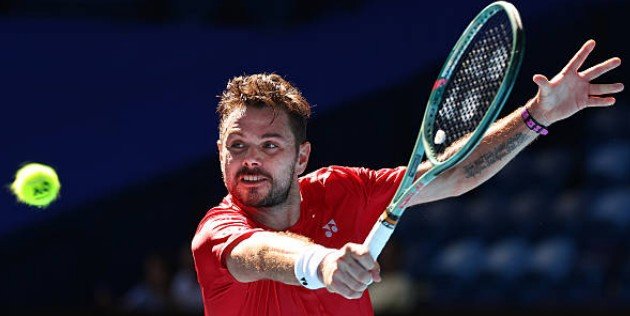
Few topics in tennis generate more debate than the backhand.
Should you learn a classic one-handed backhand like Roger Federer and Stan Wawrinka? Or is the modern two-handed backhand, used by players like Novak Djokovic, Jannik Sinner and Coco Gauff, the smarter choice?
The truth is that neither style is universally better.
Both have won Grand Slam titles. Both can produce incredible power, spin and accuracy. The best choice depends on your age, physical strength, playing style and long-term goals.
In this guide, we’ll compare the one-handed and two-handed backhand, explain the strengths and weaknesses of each, and help you decide which style is right for your game.
Quick Answer
For most beginners, the two-handed backhand is the easier stroke to learn. It offers greater stability, makes generating power simpler and is generally more forgiving under pressure.
The one-handed backhand provides greater reach, more variety and can be a beautiful attacking weapon, but it usually takes longer to master and demands excellent timing and technique.
Why Are There Two Types of Backhand?
Unlike the forehand, where nearly every professional uses one hand, the backhand has evolved in two different directions.
For much of tennis history, every player used a one-handed backhand because wooden racquets made it difficult to use two hands effectively.
As racquet technology improved and the game became faster, more players adopted the two-handed backhand to handle heavier topspin and more powerful groundstrokes.
Today, both styles still exist at the highest level, although the two-handed backhand is by far the more common choice.
The One-Handed Backhand
The one-handed backhand is one of tennis’s most elegant shots.
With only one hand on the racquet during the swing, players enjoy greater reach and excellent freedom of movement. It also allows for a smooth transition between topspin drives, slice backhands and volleys.
Because only one arm controls the racquet through contact, timing is critical. When struck well, however, the one-handed backhand is capable of exceptional power and precision.
Advantages
- Greater reach.
- Excellent slice backhand.
- Smooth transition to the net.
- Easier to disguise shots.
- More natural for some players.
Disadvantages
- Harder to learn.
- Requires greater upper-body strength.
- Less forgiving against heavy topspin.
- Demands precise timing.
- Can be more difficult on high-bouncing balls.
The Two-Handed Backhand
The two-handed backhand has become the standard in modern tennis.
Using both hands provides extra stability and allows players to generate power more easily, particularly when returning fast serves or dealing with high-bouncing balls.
For junior players and beginners, the second hand often makes the stroke feel stronger and more controlled from the very beginning.
Although it sacrifices some reach, the two-handed backhand has proven to be incredibly effective at every level of the game.
Advantages
- Easier for beginners.
- Excellent stability.
- Handles pace well.
- Comfortable on high balls.
- Consistent under pressure.
Disadvantages
- Reduced reach.
- More difficult to hit wide defensive shots.
- Slice requires changing to one hand.
- Slightly less flexibility around the body.
Side-by-Side Comparison
| Feature | One-Handed | Two-Handed |
|---|---|---|
| Beginner friendly | ⭐⭐☆☆☆ | ⭐⭐⭐⭐⭐ |
| Power | ⭐⭐⭐⭐☆ | ⭐⭐⭐⭐☆ |
| Topspin | ⭐⭐⭐⭐☆ | ⭐⭐⭐⭐☆ |
| High balls | ⭐⭐☆☆☆ | ⭐⭐⭐⭐⭐ |
| Low balls | ⭐⭐⭐⭐⭐ | ⭐⭐⭐⭐☆ |
| Reach | ⭐⭐⭐⭐⭐ | ⭐⭐⭐☆☆ |
| Slice | ⭐⭐⭐⭐⭐ | ⭐⭐⭐☆☆ |
| Return of serve | ⭐⭐⭐☆☆ | ⭐⭐⭐⭐⭐ |
| Learning curve | Harder | Easier |
Which Players Use Each Style?
Famous One-Handed Backhands
- Roger Federer
- Stan Wawrinka
- Richard Gasquet
- Stefanos Tsitsipas
- Grigor Dimitrov
Famous Two-Handed Backhands
- Novak Djokovic
- Jannik Sinner
- Carlos Alcaraz
- Andy Murray
- Daniil Medvedev
- Aryna Sabalenka
- Iga Świątek
- Coco Gauff
The fact that Grand Slam champions have succeeded with both styles shows there isn’t a single “correct” backhand.
Which Should Beginners Learn?
For the vast majority of beginners, a two-handed backhand is the better starting point.
It provides more stability, encourages good body rotation and helps players rally consistently much sooner.
That doesn’t mean every player should abandon the one-handed backhand.
Some players naturally prefer its feel, while others simply enjoy the freedom and variety it offers. If you’re willing to invest more time developing your technique, the one-handed backhand can become an outstanding weapon.
Common Myths
“The one-handed backhand is dying.”
No.
While fewer professionals use it today, it continues to win major tournaments and remains a highly effective stroke in the right hands.
“The two-handed backhand is only for beginners.”
Not even close.
Many of the greatest returners and baseline players in tennis history have relied on a two-handed backhand throughout their careers.
“One-handed backhands are more powerful.”
Power comes from technique, timing and body rotation—not simply the number of hands on the racquet.
Both styles are capable of producing world-class pace.
Frequently Asked Questions
Which backhand is easier to learn?
The two-handed backhand is generally easier for beginners because it offers greater stability and requires less upper-body strength.
Which backhand is more powerful?
Both strokes can generate excellent power. The difference usually comes down to technique rather than the style itself.
Which backhand do most professionals use?
The majority of today’s ATP and WTA professionals use a two-handed backhand, although several top players continue to compete successfully with one hand.
Should children learn a two-handed backhand?
Most junior coaches introduce the two-handed backhand first because it helps young players generate power and control while their strength develops.
Final Thoughts
There is no universally “better” backhand—only the one that best suits your game.
If you’re looking for the quickest path to consistency, the two-handed backhand is likely the right choice.
If you value variety, reach and the challenge of mastering one of tennis’s most iconic strokes, the one-handed backhand remains a fantastic option.
Whichever style you choose, commit to it, practise it consistently and build your technique around its strengths.
Continue Reading
- Tennis Backhand Grips Explained
- Tennis Grips Explained
- How to Hold a Tennis Racquet
- Forehand Grip: Eastern vs Semi-Western vs Western
Read more of our instructional articles here.
Read more of our player focus articles here.
Follow The Tennis Site on X: @thetennissite
Follow Todd Scoullar on X: @toddscoullar

Comments are closed, but trackbacks and pingbacks are open.