
Quick Answer
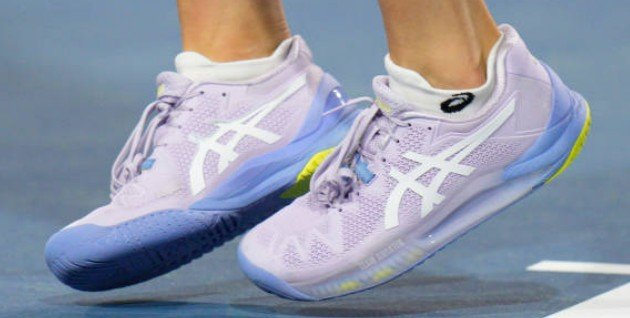
Tennis shoes are specifically designed for the explosive movement required on a tennis court.
Unlike running shoes, they provide:
- Superior lateral support
- Better stability
- Durable outsoles
- Court-specific traction
- Reinforced toe protection
Choosing the right tennis shoe improves comfort, movement, confidence and may even help reduce your risk of injury.
Why Tennis Shoes Are Different
Tennis players move differently from runners.
During a typical point you’ll:
- Sprint forwards
- Shuffle sideways
- Stop suddenly
- Recover backwards
- Change direction repeatedly
Running shoes are built primarily for forward motion.
Tennis shoes are built to support movement in every direction.
That’s why wearing proper tennis shoes is one of the easiest ways to improve both performance and comfort.
The Main Parts of a Tennis Shoe
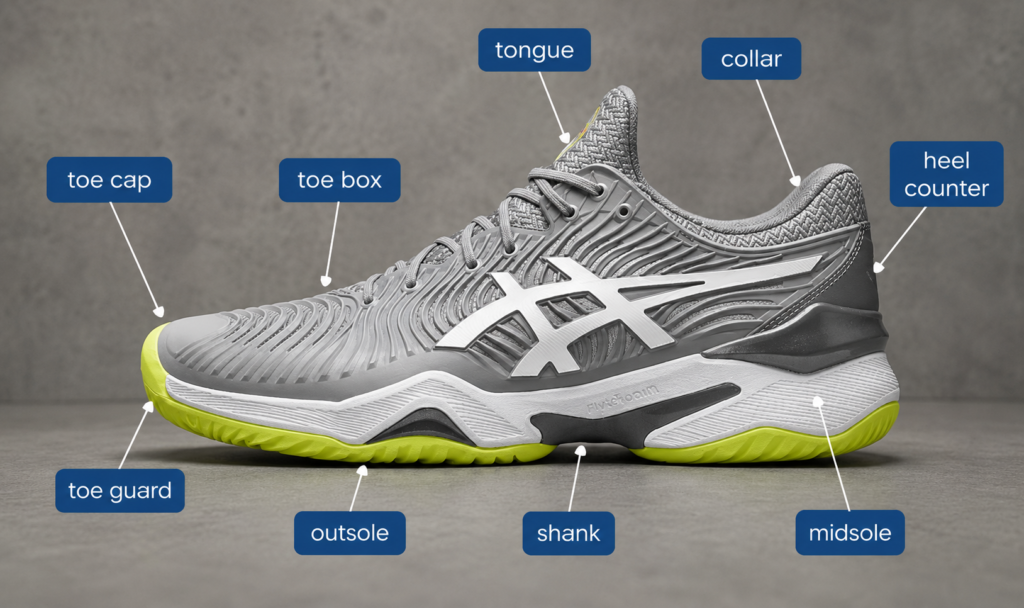
Understanding the different parts of a tennis shoe makes choosing one much easier.
Upper
The upper surrounds your foot.
It provides:
- Breathability
- Stability
- Comfort
- Durability
Some uppers prioritise lightweight speed, while others focus on maximum support.
Midsole
The midsole is responsible for cushioning.
Its job is to absorb impact while helping you stay comfortable during long matches.
Every manufacturer uses different cushioning technologies, but the goal is the same.
Outsole
The outsole is the rubber sole that contacts the court.
It determines:
- Grip
- Durability
- Sliding ability
- Court compatibility
We’ll look at the different outsole designs shortly.
Toe Guard
Most tennis shoes include reinforced material around the toe.
This protects the shoe when players drag their foot during serves or aggressive baseline rallies.
The Different Types of Tennis Shoes
Not all tennis shoes are the same.
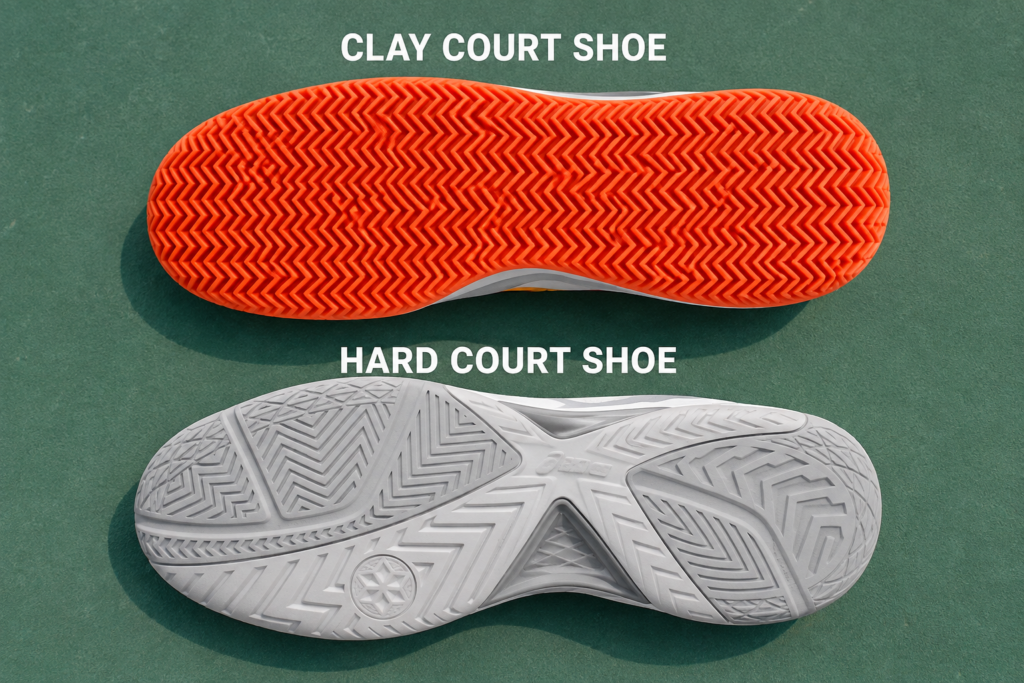
The biggest difference is the outsole, which is designed for specific court surfaces.
Hard Court Shoes
Hard courts are the most abrasive tennis surface.
Shoes designed for hard courts usually feature:
- Thick rubber outsoles
- Excellent durability
- Extra cushioning
- Strong lateral support
They’re ideal for players who spend most of their time on acrylic hard courts.
Clay Court Shoes
Clay court shoes usually feature a full herringbone tread pattern.
This allows players to:
- Slide more easily.
- Maintain grip.
- Prevent clay from clogging the sole.
Clay shoes generally offer excellent traction while remaining easy to clean.
Grass Court Shoes
Grass court shoes are much less common.
They feature specialised outsoles that provide traction without damaging natural grass.
Outside professional tournaments, very few recreational players need them.
All-Court Shoes
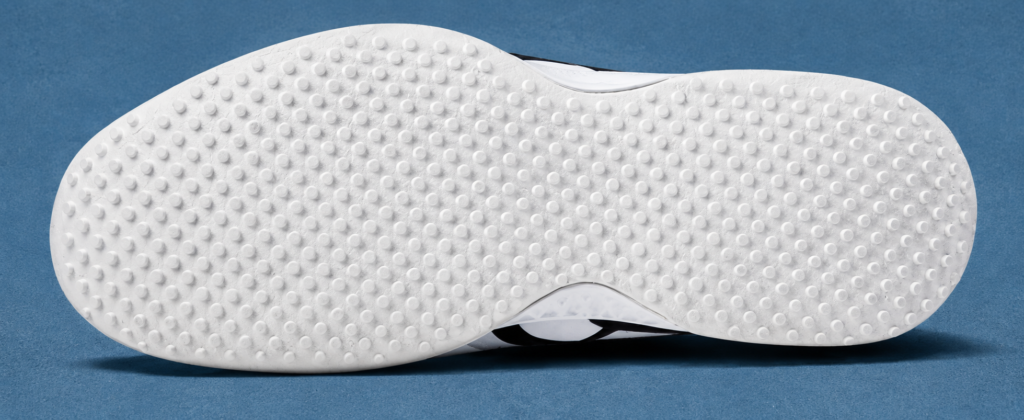
For most club players, all-court shoes are the best option.
They’re designed to perform well on multiple surfaces, making them ideal if you regularly play on different courts.
Stability vs Lightweight Shoes
Modern tennis shoes generally fall into two categories.
Stability Shoes
Designed for players who value support.
They usually offer:
- Maximum lateral stability
- Extra durability
- Greater cushioning
These shoes are often slightly heavier.
Lightweight Shoes
Designed for speed.
They provide:
- Faster movement
- Less weight
- Greater agility
The trade-off is often reduced durability.
How Should Tennis Shoes Fit?
A properly fitting tennis shoe should feel:
✔ Secure around the heel.
✔ Comfortable through the midfoot.
✔ Slightly roomy in the toe box.
There should be a small amount of space between your longest toe and the front of the shoe.
A shoe that’s too loose can lead to instability, while one that’s too tight may become uncomfortable during longer matches.
How Long Do Tennis Shoes Last?
This depends on several factors.
Including:
- Court surface
- Playing frequency
- Playing style
- Body weight
Signs it’s time for a new pair include:
- Worn tread.
- Reduced grip.
- Flattened cushioning.
- Split uppers.
- Uneven wear.
Many recreational players replace their shoes every 6–12 months, while frequent competitors may need new shoes much sooner.
Common Mistakes When Buying Tennis Shoes
Many players focus only on colour or appearance.
Instead, prioritise:
- Proper fit
- Court surface
- Stability
- Comfort
- Durability
Another common mistake is wearing running shoes for tennis.
Although they may feel comfortable initially, they generally lack the lateral support needed for tennis movement.
Common Myths
“Running shoes are fine for tennis.”
False.
Running shoes are designed for forward movement and usually don’t provide enough support for frequent side-to-side movement.
“The most expensive shoe is always the best.”
Not necessarily.
The best tennis shoe is the one that fits your foot properly and suits your style of play.
“One tennis shoe works perfectly on every surface.”
Not always.
All-court shoes perform well across multiple surfaces, but dedicated hard court and clay court shoes often provide better performance in their intended conditions.
Frequently Asked Questions
What makes tennis shoes different from running shoes?
Tennis shoes provide greater lateral support, stronger outsoles and better stability for rapid changes of direction.
Which tennis shoes should beginners buy?
A comfortable all-court shoe from a reputable manufacturer is usually the best choice.
Can I wear tennis shoes casually?
Yes.
Many tennis shoes are comfortable enough for casual wear, although doing so may wear out the outsole more quickly.
How often should tennis shoes be replaced?
Replace them once the tread wears down, the cushioning becomes flat or they no longer feel stable.
Do professional players use different shoes for different courts?
Many do.
Professional players often change shoes depending on whether they’re playing on hard, clay or grass courts.
Final Thoughts
Your tennis shoes have a greater impact on your game than many players realise. Every sprint, slide, recovery step and change of direction begins with your footwear, making it one of the most important pieces of equipment you’ll own.
For most recreational players, a quality all-court shoe provides the ideal balance of comfort, durability and versatility. If you regularly play on a specific surface, however, choosing shoes designed for that court can improve traction, movement and confidence.
Finding a shoe that fits well, supports your style of play and suits the surfaces you use most will help you move more efficiently, stay comfortable for longer and get the most enjoyment out of every match.
Continue Reading
- Clay Court vs Hard Court Tennis Shoes
- How to Choose a Tennis Racquet
- Tennis Bags Explained
- Tennis Grip Size Guide
- The Complete Guide to Tennis Equipment
Read more of our instructional articles here.
Read more of our news articles here.
Follow The Tennis Site on X: @thetennissite
Follow Todd Scoullar on X: @toddscoullar

Comments are closed, but trackbacks and pingbacks are open.