
Quick Answer
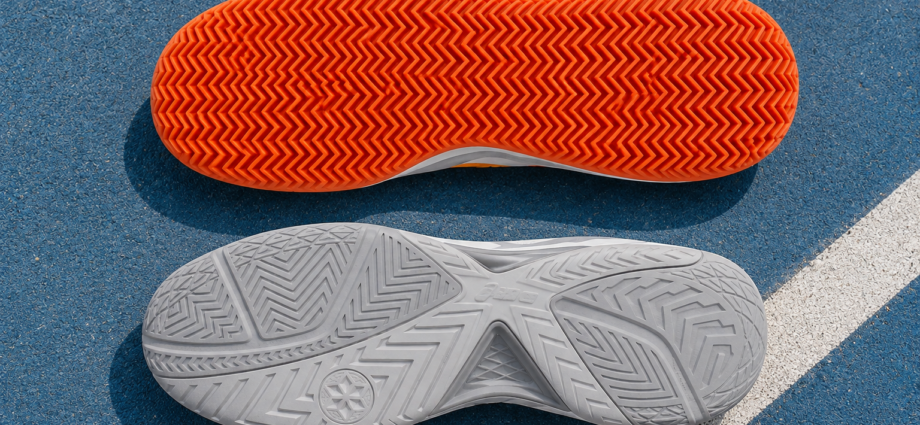
Clay court and hard court tennis shoes are designed for very different playing surfaces.
Hard court shoes focus on durability, cushioning and stability to cope with the abrasive nature of acrylic courts.
Clay court shoes feature a full herringbone tread pattern that improves grip, allows controlled sliding and prevents clay from becoming trapped in the sole.
If you mainly play on one surface, it’s generally best to wear shoes designed specifically for that court.
Why Court Surface Matters
Every tennis court places different demands on your footwear.
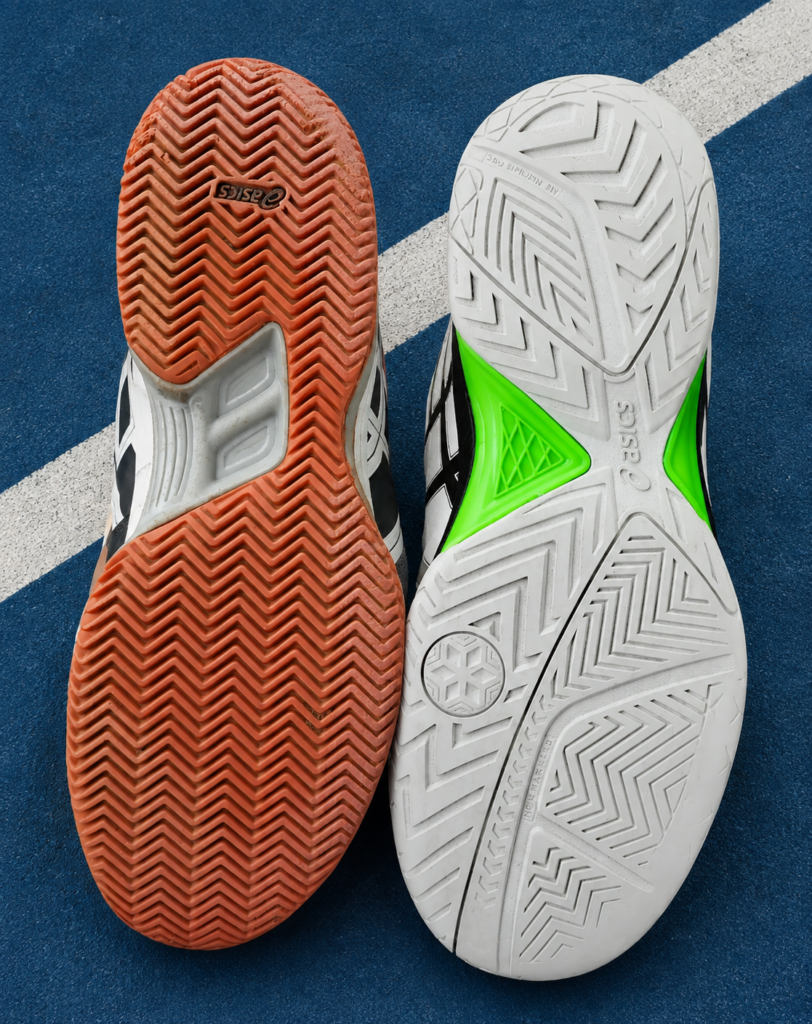
Hard courts are rough and abrasive, while clay courts are softer and allow players to slide into shots.
Because of this, manufacturers design different outsole patterns and levels of cushioning for each surface.
If you’re new to tennis shoes, start with Tennis Shoes Explained before choosing a court-specific model.
Hard Court Tennis Shoes
Hard courts are the most common playing surface in many countries.
They’re also the toughest on both players and equipment.
Hard court shoes are built with:
- Thick, durable rubber outsoles
- Extra cushioning
- Strong lateral support
- Reinforced uppers
The additional cushioning helps absorb the repeated impact of playing on a rigid surface.
Advantages
✔ Excellent durability
✔ Comfortable cushioning
✔ Stable during aggressive movement
✔ Long-lasting outsole
Disadvantages
✘ Usually heavier
✘ Less effective for sliding on clay
Clay Court Tennis Shoes
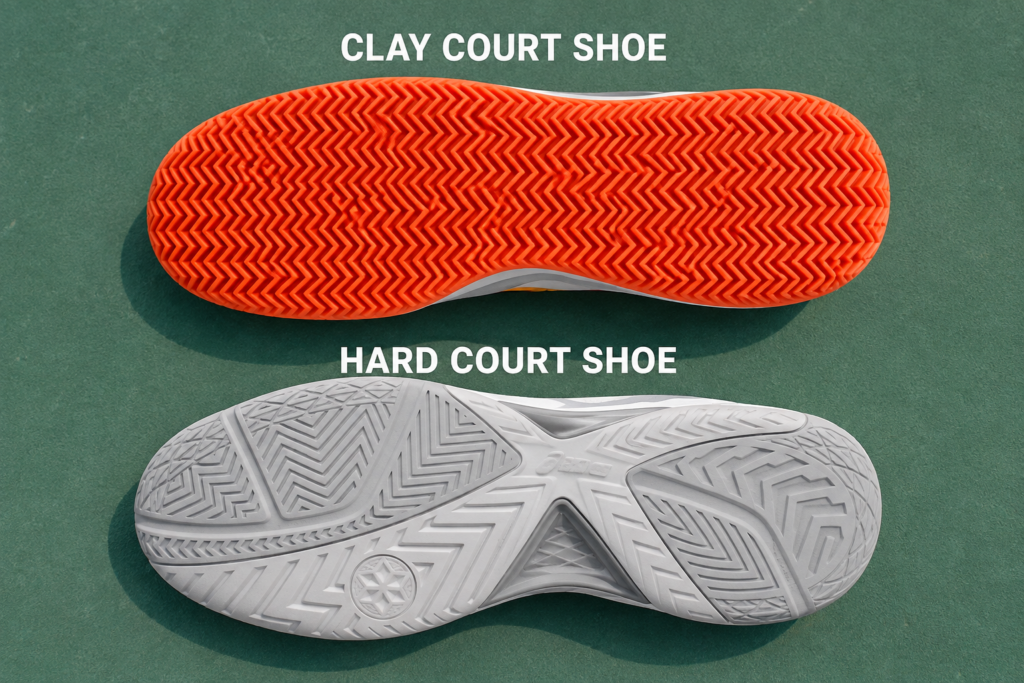
Clay court shoes are instantly recognisable by their full herringbone tread pattern.
This distinctive sole helps players:
- Slide under control
- Maintain grip
- Release clay more easily
- Prevent excessive build-up in the tread
Clay shoes are generally slightly lighter than many hard court models and are designed to maximise movement on loose surfaces.
Advantages
✔ Excellent traction on clay
✔ Controlled sliding
✔ Self-cleaning tread pattern
✔ Lightweight feel
Disadvantages
✘ Faster outsole wear on hard courts
✘ Less cushioning than many hard court shoes
The Biggest Differences
| Feature | Hard Court Shoes | Clay Court Shoes |
|---|---|---|
| Outsole | Durable rubber | Full herringbone |
| Cushioning | High | Moderate |
| Durability | Excellent | Moderate |
| Sliding | Limited | Excellent |
| Grip on Clay | Good | Excellent |
| Grip on Hard Courts | Excellent | Good |
| Clay Build-up | N/A | Minimal |
Can You Wear Clay Court Shoes on Hard Courts?
Yes—but it’s not ideal.
Clay court shoes will work on hard courts, especially for occasional play.
However:
- The outsole wears much faster.
- Cushioning is usually reduced.
- The herringbone tread can wear down quickly on abrasive surfaces.
If you play mostly on hard courts, dedicated hard court shoes are the better long-term choice.
Can You Wear Hard Court Shoes on Clay?
Yes.
Many recreational players do exactly that.
However, you’ll usually notice:
- Less controlled sliding.
- More clay becoming trapped in the tread.
- Slightly less grip during movement.
For occasional clay court play, hard court shoes are perfectly acceptable.
For regular clay court competition, clay-specific shoes perform noticeably better.
What About All-Court Shoes?
Many manufacturers produce all-court tennis shoes.
These aim to balance:
- Durability
- Grip
- Comfort
- Versatility
They’re an excellent choice for players who regularly switch between surfaces.
For most recreational players, an all-court shoe is often the most practical option.
Which Should You Buy?
Choose Hard Court Shoes If You:
- Mainly play on acrylic hard courts.
- Want maximum durability.
- Prefer extra cushioning.
- Play several times each week.
Choose Clay Court Shoes If You:
- Mostly play on clay.
- Like sliding into shots.
- Want maximum grip on loose surfaces.
- Compete regularly on clay.
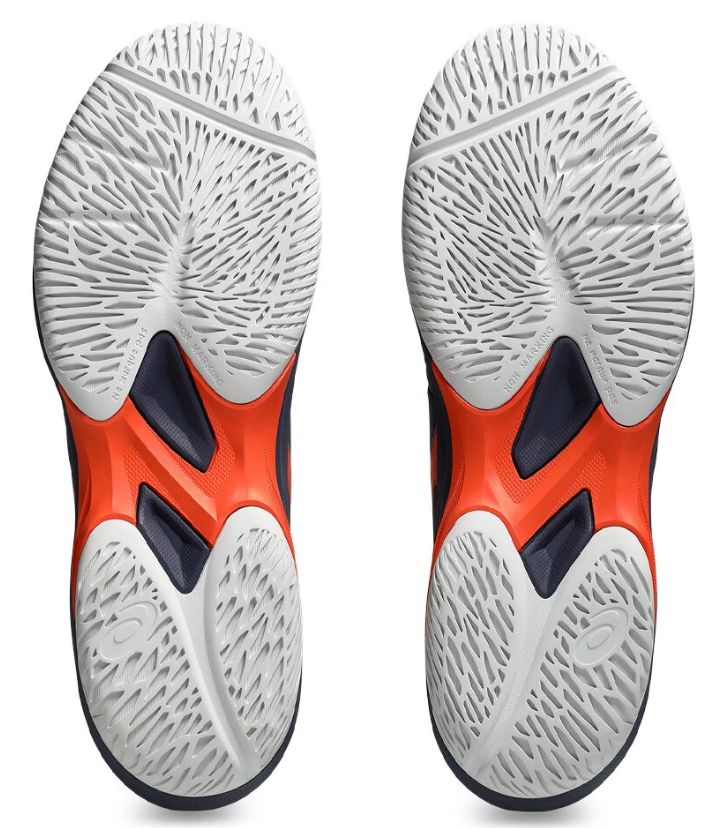
Choose All-Court Shoes If You:
- Play on different surfaces.
- Want one versatile pair.
- Prefer convenience over specialisation.
Common Myths
“Clay court shoes can’t be worn on hard courts.”
False.
They can, but the outsole generally wears much faster.
“Hard court shoes don’t work on clay.”
Not true.
Many recreational players use them successfully, although they don’t provide the same sliding characteristics.
“All-court shoes are simply marketing.”
No.
All-court shoes are designed to provide balanced performance across multiple surfaces, making them an excellent option for many club players.
Frequently Asked Questions
Do professionals wear different shoes for different tournaments?
Yes.
Many professional players switch between hard court, clay court and grass court shoes depending on the tournament.
Are clay court shoes worth buying?
If you regularly play on clay courts, absolutely. They provide better grip and allow smoother sliding.
Can I use hard court shoes everywhere?
Yes.
Hard court shoes are the most versatile option, although they aren’t always the best performer on clay.
What are all-court tennis shoes?
All-court shoes are designed to perform well on multiple surfaces, offering a compromise between durability and traction.
Which tennis shoe lasts the longest?
Hard court shoes generally have the most durable outsoles because they’re built for the most abrasive playing surface.
Final Thoughts
Although clay court and hard court tennis shoes may look similar, they’re built with different priorities in mind. Hard court shoes focus on durability, cushioning and support, while clay court shoes are designed to maximise grip and controlled sliding on loose surfaces.
For players who spend most of their time on one type of court, choosing surface-specific shoes can noticeably improve comfort and movement. If you play on a variety of surfaces, a quality all-court shoe is often the most practical solution.
Continue Reading
- Tennis Shoes Explained
- Tennis Bags Explained
- How to Choose a Tennis Racquet
- Tennis Grip Size Guide
- The Complete Guide to Tennis Equipment
Read more of our instructional articles here.
Read more of our news articles here.
Follow The Tennis Site on X: @thetennissite
Follow Todd Scoullar on X: @toddscoullar

Comments are closed, but trackbacks and pingbacks are open.