
Quick Answer
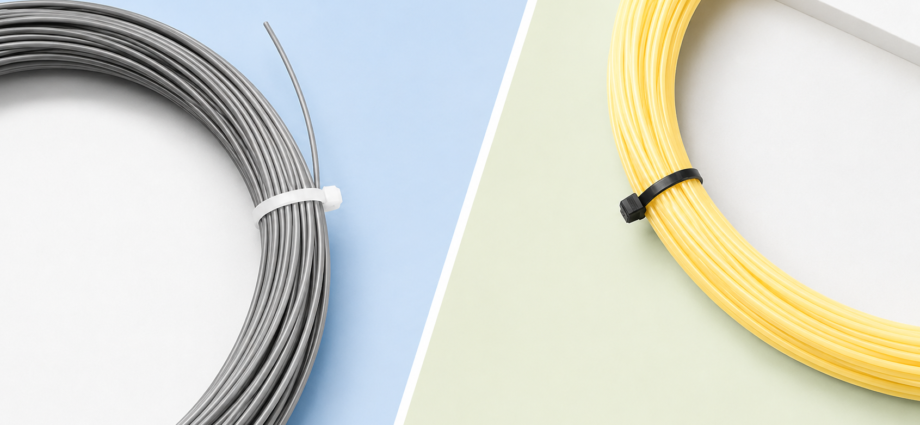
Tennis string gauge refers to the thickness of the string.
- Lower gauge numbers (such as 15L or 16) are thicker, making them more durable.
- Higher gauge numbers (such as 17 or 18) are thinner, providing more feel, spin and ball pocketing.
For most recreational players, 16 or 17 gauge offers the best balance between performance and durability.
What Is Tennis String Gauge?
One of the easiest ways to customise your racquet is by changing the string gauge.
Gauge simply refers to the diameter (thickness) of the string. Although the difference between gauges is only fractions of a millimetre, it can noticeably affect how your racquet plays.
Changing the gauge influences:
- Durability
- Spin
- Feel
- Power
- Control
Why Are Lower Gauge Numbers Thicker?
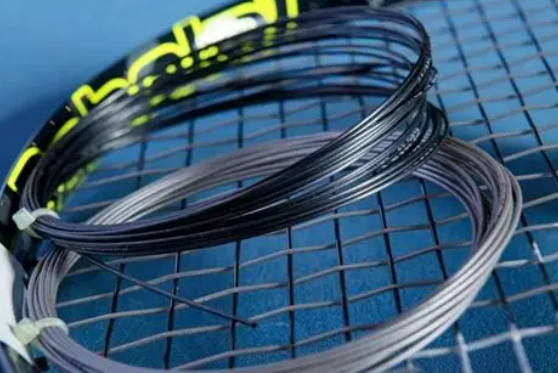
Unlike most measurements, tennis string gauges work in reverse.
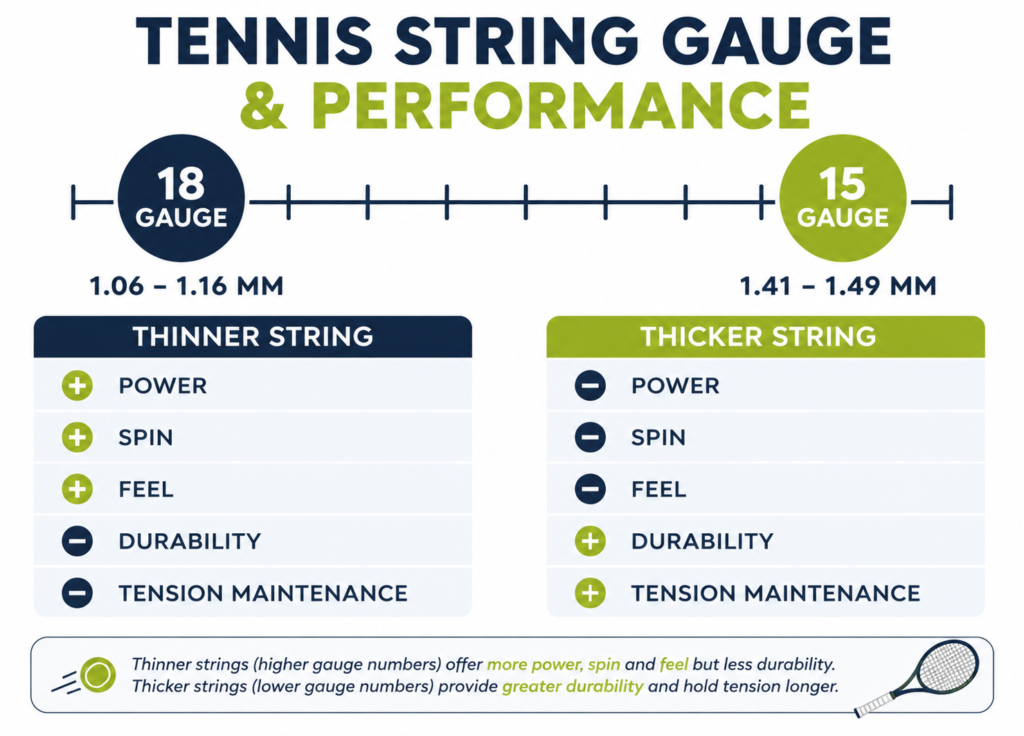
A 16 gauge string is thicker than a 17 gauge string, while a 15 gauge string is thicker than both.
This numbering system dates back many years and has simply remained the industry standard.
Here’s a simple way to remember it:
Lower number = thicker string. Higher number = thinner string.
Common Tennis String Gauges
| Gauge | Diameter (Approx.) | Characteristics |
|---|---|---|
| 15 | 1.41–1.49 mm | Maximum durability |
| 15L | 1.34–1.40 mm | Very durable |
| 16 | 1.26–1.33 mm | Excellent all-round choice |
| 16L | 1.22–1.26 mm | Slightly thinner than 16 |
| 17 | 1.16–1.24 mm | More feel and spin |
| 18 | 1.06–1.16 mm | Maximum feel and ball pocketing |
Note: Exact diameters vary slightly between manufacturers.
How Does String Gauge Affect Performance?
Although gauge doesn’t completely transform your racquet, it does create noticeable differences.
Let’s look at each area individually.
Durability
🏆 Winner: Thicker Strings
The thicker the string, the more material there is to wear away before it breaks.
If you’re a frequent string breaker or hit with heavy topspin, a thicker gauge is often the better option.
For example:
- 16 gauge usually lasts longer than 17 gauge.
- 15L lasts longer than both.
Spin
🏆 Winner: Thinner Strings
Thinner strings can grip the ball slightly better and allow greater ball pocketing, helping generate additional spin.
The difference isn’t dramatic, but advanced players often notice it.
Spin is also heavily influenced by string type and string pattern.
For more information, see 16×19 vs 18×20 String Pattern
Feel
🏆 Winner: Thinner Strings
Many players describe thinner strings as feeling:
- Softer
- More responsive
- More connected to the ball
This makes them popular among players who value touch, particularly in doubles or all-court tennis.
Power
The difference in power between gauges is relatively small.
However, thinner strings tend to stretch a little more during impact, giving some players a slightly livelier response.
Control
Neither thick nor thin strings automatically provide more control.
Control depends far more on:
- String type
- String tension
- Swing speed
- Racquet characteristics
If you’re looking to increase control, adjusting your string tension often has a greater effect than changing gauge.
16 Gauge vs 17 Gauge
This is the comparison most players make.
16 Gauge
Pros
- Longer lasting
- Better for frequent players
- Great all-round choice
Cons
- Slightly firmer feel
- Marginally less spin potential
17 Gauge
Pros
- More feel
- Slightly better spin
- Softer response
Cons
- Breaks sooner
- May require more frequent restringing
Which Gauge Should You Choose?
Choose 16 Gauge if you:
- Break strings regularly.
- Play several times each week.
- Want maximum durability.
- Prefer an all-round option.
Choose 17 Gauge if you:
- Prioritise feel.
- Like generating topspin.
- Enjoy touch shots and volleys.
- Don’t mind restringing a little more often.
Consider 15L if you:
- Break strings very quickly.
- Use heavy topspin.
- Want the longest-lasting setup possible.
Consider 18 Gauge if you:
- Value feel above everything else.
- Rarely break strings.
- Are an advanced player looking for maximum touch.
Does Gauge Matter More Than String Type?
Generally, no.
Choosing the right string type has a much bigger impact on performance than choosing a different gauge.
For example, switching from synthetic gut to polyester creates a far bigger change than switching from 16 gauge to 17 gauge.
If you’re deciding between string materials, read Polyester vs Multifilament vs Synthetic Gut (🔗 Internal Link) first.
Should Beginners Worry About String Gauge?
Not really.
Most beginners are best served by a 16 gauge synthetic gut or multifilament string, as it offers a good balance of durability, comfort and value.
As your game develops, you can begin experimenting with different gauges to fine-tune your setup.
Common Myths
“Thinner strings always create more spin.”
Not necessarily.
Spin depends on several factors, including your swing speed, string material, string pattern and technique.
“Thicker strings are only for professionals.”
Many recreational players actually benefit from thicker strings because they last longer and require less frequent restringing.
“Changing gauge completely changes your racquet.”
Gauge can make a noticeable difference, but it won’t dramatically alter your racquet’s overall characteristics.
Frequently Asked Questions
What is the best tennis string gauge?
For most recreational players, 16 gauge offers the best balance of durability, comfort and performance.
Is 17 gauge better than 16 gauge?
Not necessarily.
17 gauge provides more feel and slightly more spin, while 16 gauge lasts longer.
Which string gauge lasts the longest?
15 and 15L gauge strings generally offer the greatest durability.
Do professionals use thinner strings?
Many professionals use 16L or 17 gauge polyester strings, although their exact setups vary depending on playing style and personal preference.
Can changing gauge help my game?
Yes.
Changing string gauge can fine-tune the feel and durability of your racquet, especially once you’ve already found a string type you like.
Final Thoughts
Tennis string gauge is one of the simplest ways to customise how your racquet performs. While the differences between gauges are subtle compared to changing string type or tension, they can still influence durability, feel and spin.
For most players, 16 gauge is the safest all-round choice, offering a dependable balance of longevity and performance. Players who prioritise feel and touch may prefer 17 gauge, while heavy hitters who frequently break strings often benefit from thicker options like 15L.
As with many aspects of tennis equipment, the best gauge is the one that complements your playing style and keeps you confident on court.
Continue Reading
- Tennis String Tension Explained
- How Often Should You Restring a Tennis Racquet?
- Polyester vs Multifilament vs Synthetic Gut
- 16×19 vs 18×20 String Pattern
- How to Choose a Tennis Racquet
Read more of our instructional articles here.
Read more of our player focus articles here.
Follow The Tennis Site on X: @thetennissite
Follow Todd Scoullar on X: @toddscoullar

Comments are closed, but trackbacks and pingbacks are open.