
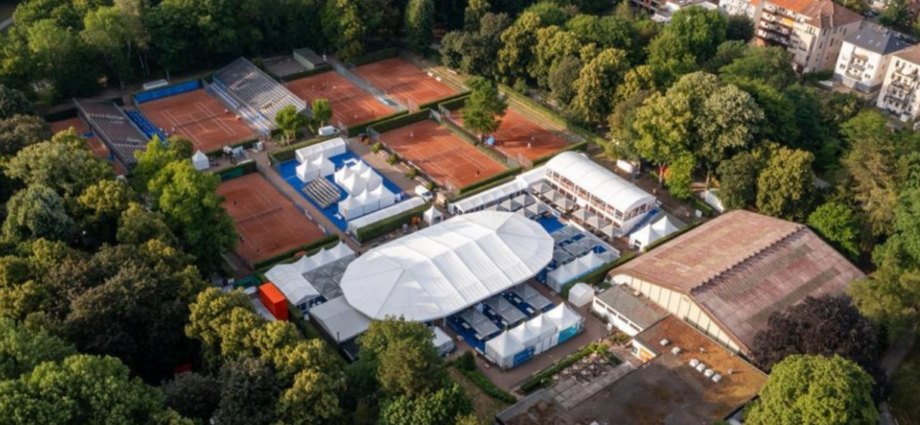
One of the ATP Challenger Tour’s longest-running and most distinctive tournaments has come to an abrupt end.
The BRAWO Open in Braunschweig will not return in 2027 after organisers confirmed that they could no longer secure the financial support required to stage the event.
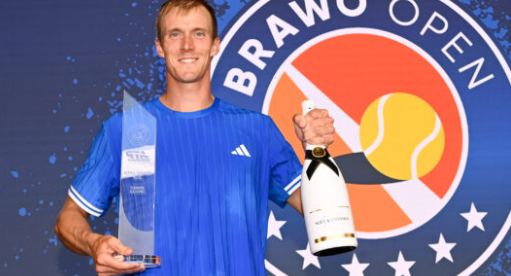
First held in 1994, the clay-court tournament completed its 32nd edition in July. Unless a new organiser and financial backer emerge, Britain’s Jan Choinski will remain its final singles champion.
Why is the BRAWO Open ending?
The decision is directly connected to the financial difficulties facing Volksbank BRAWO, the tournament’s main sponsor.
Brunswiek Marketing GmbH, the company responsible for staging the event and a subsidiary of Volksbank BRAWO, informed its partners, co-sponsors and local government representatives that it would be unable to hold the tournament next year.
Jürgen Wache, the bank’s designated chairman, called it “a bitter decision” in a statement translated from German. He acknowledged the tournament’s importance to Braunschweig and the surrounding region, describing it as an event that brought elite sport and culture together.
However, Volksbank BRAWO is undergoing a substantial restructuring process, leaving it with little capacity to continue funding sponsorships of this size.
The bank reported that its preliminary result for 2025, after significant write-downs involving loans, securities, investments and property, would have been a loss of €608.1 million. That figure is not the cost of the tennis tournament, but it explains why continued financial support could no longer be justified.
Organisers searched unsuccessfully for additional sponsors, partners and a possible co-organiser. No replacement sponsor or alternative plan for 2027 has been announced.
More than an ordinary Challenger
The announcement is particularly surprising because the BRAWO Open did not appear to be an event in decline.
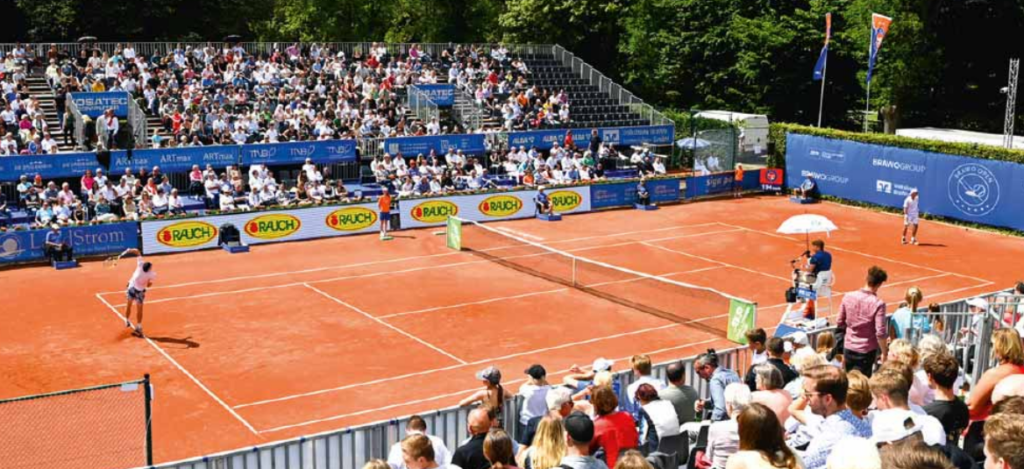
The 2025 edition attracted a record 36,500 visitors, while another 35,085 attended the 11-day tennis and entertainment program in 2026.
Prize money was increased for the final edition, rising from €181,250 to €203,900. The tournament retained its ATP Challenger 125 status, with the singles champion receiving 125 ranking points.
Played at the Braunschweiger Tennis and Hockey Club in the city’s Bürgerpark, the event was known for combining professional tennis during the day with concerts, parties and entertainment at night.
According to the ATP, it was the longest-running Challenger in Germany and the ninth-longest-running tournament on the Challenger Tour. It was named Challenger Tournament of the Year five times between 2014 and 2019.
For myself though, the history of Braunschweig is about more than just attendance figures, prize money and awards. I was fortunate enough to attend the tournament on several occasions, including one of the most surprising come-back matches professional tennis has seen.
Thomas Muster’s unlikely return
In 2010, Thomas Muster arrived in Braunschweig at the age of 42, preparing to play his first professional match in 11 years.
Muster was not just a former player of some note. He was a former world No.1, the 1995 French Open champion and one of the greatest clay-court players in history.
The Austrian won 44 ATP singles titles, including eight Masters events and 40 on clay. During his extraordinary 1995 season, he compiled a 40-match winning streak on clay and finished the year with a 65–2 record on the surface.
His decision to return therefore attracted attention well beyond the normal Challenger audience.
I was at Braunschweig that week and had access to the locker-room area. Around the grounds, there was genuine excitement at seeing a champion of Muster’s stature competing at such close range. Inside the locker room, the mood was a little different.
There was curiosity, certainly, but also a noticeable tension among the players waiting for the draw. Nobody wanted to become the first professional to lose to a 42-year-old who had been away from the tour for more than a decade, meaning no-one wanted to play him first.
The assignment eventually went to Ireland’s Conor Niland, then ranked No.165 in the world.
When I later asked Niland what it was like to discover that he would face Muster in his comeback match, he admitted there were some nerves.
“It was a bit awkward…. A great experience to play a former Grand Slam champ on clay. I didn’t know what to expect! Definitely a little nervous…”
In the end, Niland had little trouble with the result. He defeated Muster 6–2, 6–1 in 76 minutes in front of approximately 2,000 spectators.
The score, however, was almost secondary. Muster said afterwards that he had enjoyed every minute on court. After only three weeks of training, he acknowledged that his feet were not yet doing what his mind wanted them to do.
Later that evening, back at the hotel, I spotted Muster sitting alone at the bar and took the opportunity to speak with him.
Amongst other things, such as his life in Australia, I asked the most obvious question: why return after so long?
It was a pretty straight-forward answer from him. He wanted to compete again. He wanted to test himself against a different generation and discover what he was still capable of doing.
That week remains one of my strongest memories of Braunschweig. It also shows exactly what made the tournament special. At many larger events, access to someone of Muster’s stature would have been almost impossible. In Braunschweig, a former world No.1 could return after 11 years, play in front of a full crowd and later be found quietly sitting at the hotel bar.
A stage for established names and future stars
Four years after Muster’s comeback, Braunschweig produced another significant moment.
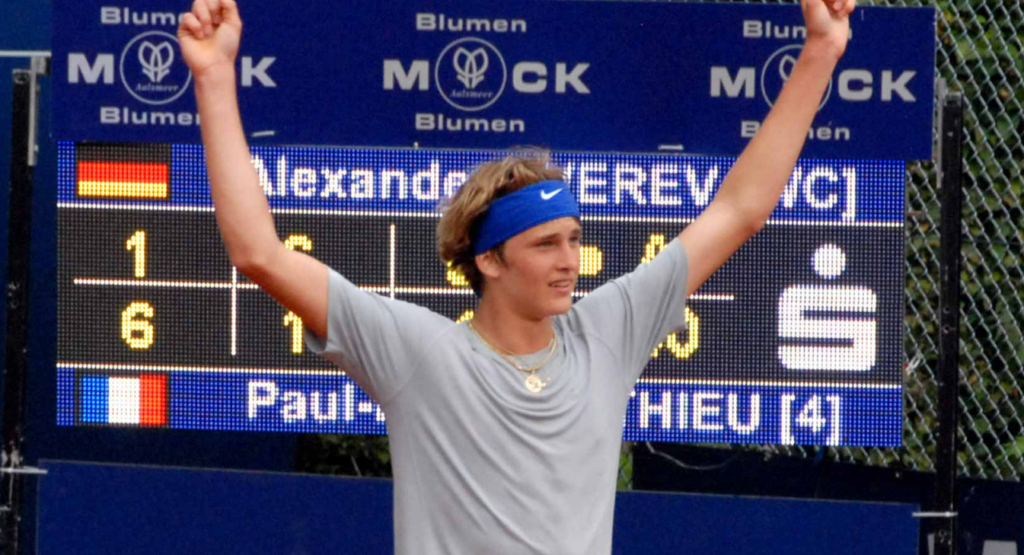
Alexander Zverev entered the 2014 tournament as a 17-year-old wildcard ranked No.665. He had recorded only one previous Challenger main-draw victory.
Zverev defeated three Top 100 opponents during the week, including world No.56 Andrey Golubev in the semifinals and No.89 Paul-Henri Mathieu in the final.
After dropping the opening set against Mathieu, Zverev recovered to win 1–6, 6–1, 6–4 and claim his first Challenger title.
Other notable Braunschweig champions included Gastón Gaudio, Tomas Berdych, Andrea Gaudenzi, Florian Mayer, Jan-Lennard Struff and Daniel Altmaier.
That mixture of former champions, established professionals and young players attempting to break through was a big part of Braunschweig’s appeal. Spectators could be treated to a former world No.1 making an improbable comeback one year and a future star beginning his rise a few years later.
Jan Choinski becomes the final champion
Jan Choinski won the final edition in 2026, defeating France’s Hugo Gaston 4–6, 6–0, 6–4.
Brazilian pair Orlando Luz and Rafael Matos claimed the doubles title with a 7–5, 6–2 victory over Arthur Reymond and Luca Sanchez.
The tournament finished with another strong crowd and few outward signs that its future was in danger. Less than three months later, its closure was confirmed.
A future revival cannot be ruled out, but it would require a new organiser and considerable financial support. As of October 5, no rescue proposal has been announced.
The loss of Braunschweig for me, and many others is more than another event disappearing from the calendar. It is the end of a tournament where tennis, entertainment and big crowds were the norm, year in year out. THat is not always the case on the Challenger Tour.
For those of us fortunate enough to experience it, Braunschweig will be remembered for far more than its results.
Continue Reading
Read more of our exclusive feature articles here.
Read more of our player focus articles here.
Follow The Tennis Site on X: @thetennissite
Follow Todd Scoullar on X: @toddscoullar

Comments are closed, but trackbacks and pingbacks are open.