
On the first Monday of a Grand Slam, the most interesting match in the tournament is rarely on the main show court.
It is usually out on Court 14 or 17, where a qualifier ranked outside the world’s top 150 is two sets into the match of his life, watched in person by a few hundred people standing three rows deep — and, these days, by almost anyone else on the planet who cares to look.
That second audience is new. For most of tennis history, it did not exist.
The tournament television chose for you
Embed from Getty ImagesUntil surprisingly recently, a Slam on television was an edited product. Broadcasters had a limited number of channels and a limited number of fully produced courts, so they made a choice each day about what the world would watch — and the world watched it.
If your player was not a star, or your compatriot was playing the match of her life on an outside court, you followed the score and hoped for a highlights clip. The other tournament — the sprawling, strange, wonderful one happening across fifteen or so outside courts — was effectively invisible unless you were there.
Streaming did not just add a screen. It removed the editor.
Every court is a broadcast court now
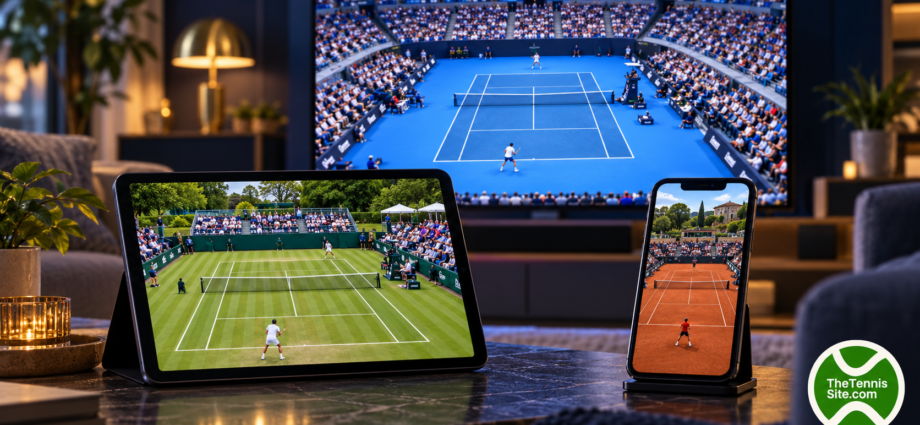
The four Slams now produce coverage of every match court as a matter of routine. Cameras, data feeds and commentary positions are built into the grounds, not reserved for the biggest arenas, and the tournaments’ broadcast partners put the whole thing online.
At Wimbledon, every court is streamed live in the UK through the BBC’s services. The US Open’s broadcaster streams every match, qualifying included. The Australian Open and Roland Garros work the same way through their rights partners in each market.
Embed from Getty ImagesSo a first-round match on an outside court is no longer a rumour. It is a program, available from the first ball, to anyone who chooses it.
Where the next names come from
The readers of a site like this one know where tennis actually lives. It lives on the ITF World Tennis Tour, where a 26-year-old Australian can win nine singles titles in a season and still be fighting for a Challenger breakthrough. It lives in qualifying draws, where a 16-year-old ranked outside the world’s top 700 can arrive at a tournament unknown and leave with a trophy.
Streaming has connected that world to the Slams. The player you discover in a streamed first-round match on an outside court is very often the same player you followed through the lower tours — and now you can watch the whole journey instead of joining it halfway through.
Emma Raducanu’s 2021 US Open title remains the famous example, precisely because the run was visible from the start. She came through qualifying, every match was streamed, and her tournament did not begin for audiences in the fourth round, when television finally noticed. It began where it actually began.
Embed from Getty ImagesFans now adopt players in the first week of a Slam and follow them for years. The sport’s next stories are being written on the outside courts, in front of everybody.
A different kind of fandom
There is a simpler pleasure here, too: you can build your own day.
A streaming viewer is effectively their own director, cutting between a fifth set on one court and a breakthrough on another, checking in on a compatriot, dipping into the doubles because the crowd noise suggests something is happening.
And the outside courts reward that attention. Anyone who has been to a Slam knows the best atmosphere is rarely inside the biggest stadium. It is on the low-bleacher courts where you can hear the shoes squeak and the coach mutter. Streaming has exported some of that intimacy to everyone.
Authorised coverage — and everything else
Embed from Getty ImagesOne honest complication comes with this abundance: working out where a particular match is actually being shown. Rights differ by country and by tournament, and the same Slam can sit with different broadcasters in different markets.
The distinction worth keeping is a simple one. Authorised broadcasters — the tournaments’ official rights partners — carry the full, legal coverage: every court, reliably, with proper commentary and picture quality.
Unofficial streams are a different category altogether: unauthorised, unreliable, and prone to failing at the exact moment a match gets interesting. The modern abundance of legitimate coverage has, happily, made them largely unnecessary.
The fortnight got bigger
None of this has diminished the show courts. A night session in a full stadium is still one of sport’s great spectacles.
But a Grand Slam is no longer only the matches somebody else chose for you. It is more than 200 singles matches, a doubles draw full of specialists worth your time, juniors becoming names and qualifiers becoming stories — all of it available, all of it findable.
The best seat at a Slam used to depend on money and luck. Increasingly, it depends on curiosity. The tennis was always out there on the outside courts. Now everyone can watch it.
Continue Reading
Read more of our exclusive feature articles here.
Read more of our player focus articles here.
Follow The Tennis Site on X: @thetennissite
Follow Todd Scoullar on X: @toddscoullar

Comments are closed, but trackbacks and pingbacks are open.